
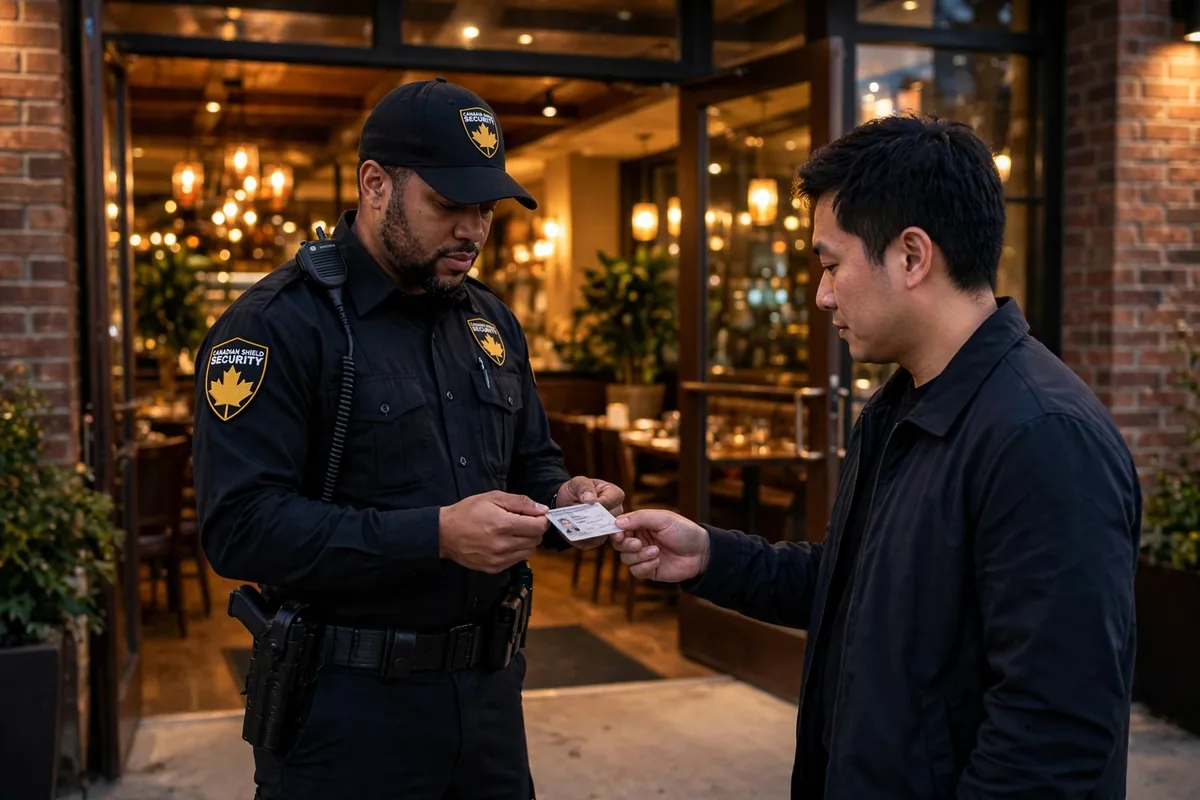

A Whyte Avenue (T6E) pub hits 1:40 a.m. on a January Saturday: the line outside sits at -30C, one door person checks ID, and two bartenders are cutting off a loud table. One shove spills onto the sidewalk. That is the moment a written plan either works or does not.
Restaurant and bar security in Edmonton means covering door control, floor presence and a calm closing routine. Canadian Shield Security supplies guards licensed under the Security Services and Investigators Act (Alberta) (SSIA) for door, floor and closing-time cover.
This guide explains the rules Alberta sets for door staff, how to match coverage to your venue, what it costs, and how to run a calm closing. It suits owners from Jasper Avenue (T5J) to Mill Woods (T6K).
What Restaurant and Bar Security Edmonton Owners Face After Dark
Edmonton restaurants and bars face five recurring late-night risks: intoxication disputes, overcrowding, banned patrons returning, staff safety at closing, and after-hours break-ins. Each peaks at a different hour, so coverage should follow the clock.
Pubs on Whyte Avenue (T6E) and Jasper Avenue (T5J) run heavy Friday and Saturday traffic, and event nights near Rogers Place add spillover crowds. Neighbourhood venues in Mill Woods (T6K) see fewer fights but still hold cash and alcohol after dark.
Restaurants are not exempt. A dinner service that turns into a late bar crowd, a busy July patio, or a dispute over a bill can escalate quickly. If your licence allows late service, treat the last two hours like a bar.
| Risk | When it peaks | First-line control |
|---|---|---|
| Intoxication disputes | 11 p.m. to last call | Trained servers and a floor guard |
| Overcrowding | Friday and Saturday peaks | Door counts against posted occupant load |
| Banned patrons returning | After a closing-time removal | Written trespass notice and door photo log |
| Staff safety at close | 2 a.m. to 3 a.m. | Escorts to vehicles, cash counted in pairs |
| After-hours break-in | Closed hours | Alarm response and mobile patrol |
What Alberta Law Requires of Door Staff and Licensees
Alberta sets three layers of rules for late-night venues: personal licensing for security workers, AGLC training for licensed premises, and workplace safety duties for every employer.
Under the Security Services and Investigators Act (Alberta), anyone paid to guard property or protect people needs a security service worker licence, valid for two years. Review the Alberta security licence rules and our overview of the SSIA licence for security guards in Alberta and confirm in-house door staff with Security Programs at 1-877-462-0791.
AGLC adds its own rule. ProTect certification is mandatory for security staff, employed or contracted, and their supervisors in Class A Minors Prohibited premises. Staff must certify within 30 days of starting, and the free course requires an 80% exam score.
Which Security Setup Fits Your Venue
A single licensed door guard suits most restaurants with a late bar crowd, while busy pubs and nightclubs need a door team plus a floor guard. Many venues add mobile patrol for closed hours.
Our on-site guard service covers the door and floor, and our crowd control security supports busy nights and event spillover. Costs below are Edmonton market estimates and vary by night and venue.
Ask each provider for licence details, ProTect certificates, written post orders, how incidents reach you, and who covers when a guard cancels. Prepared teams answer all five without hesitation.
| Setup | Best for | Estimated cost |
|---|---|---|
| Door guard, 6 hours, 3 nights | Restaurants with late service | $576-$810 per week |
| Two guards, 6 hours, 2 nights | Busy Friday and Saturday pubs | $768-$1,080 per week |
| Licensed guard, per hour | Any setup | $32-$45 per hour |
| Mobile patrol and alarm response | Closed-hours cover | Quoted per site after assessment |

How to Run a Calm Closing, Step by Step
Run every closing in six steps, starting well before the lights come up. Written steps keep staff consistent when the room is loud and tired.
- Stop liquor service one hour before closing, as AGLC rules require.
- Announce last call calmly and keep one guard visible near the door.
- Raise the lights and clear drinks before the 3 a.m. deadline.
- Release patrons in small groups, and arrange rides for anyone intoxicated.
- Escort staff to vehicles and count cash in pairs.
- Log incidents, banned patrons and injuries the same night.
Post orders (written guard instructions) should name who to call, where the exits are, how to handle a patron who refuses to leave, and when to phone 911. Keep one copy at the bar and one with your guard provider.
When to Call a Professional Security Company
Call a licensed security company when fights repeat, door staff are untrained or overwhelmed, or banned patrons keep returning. Two or more physical incidents in a month is a clear signal.
Our event security services cover busy nights and heavy weekend volume. Owners handling repeat visitors should read up on trespass laws in Alberta.
A banned patron can be told to leave and not return. Under the Trespass to Premises Act, the owner or an authorized representative may give that notice orally or in writing, so train managers and door staff to document it.
Keeping Late-Night Security Working Year-Round
Review your incident log every month and your security plan every quarter, and revisit your Part 27 plan at least every three years. Patterns by weekday and hour show where to add or cut coverage.
Summer patios, winter lineups and event nights each change your risk. Good lighting and clear sightlines also help. Refresh staff on de-escalation twice a year.
Track three numbers: incidents per month, patrons refused entry, and staff reports of feeling unsafe. If incidents fall for two quarters, hold coverage steady. If they rise, add guard hours before the next review.

Conclusion
Reliable restaurant and bar security Edmonton venues can sustain rests on three habits: licensed door staff, a written closing routine, and honest review of every incident. Small steps, such as counting patrons against occupant load and escorting staff at close, prevent the nights that cost the most.
If your venue in T6E, T5J or Sherwood Park wants a second opinion, our team will walk the site with you and explain every option in plain terms through a free site assessment and consultation.
Frequently Asked Questions About Bar and Restaurant Security in Edmonton
Do bar bouncers in Edmonton need a security licence?
Generally yes. Under the Security Services and Investigators Act (Alberta), people paid to guard property or protect patrons need a security service worker licence, valid for two years. AGLC also requires ProTect certification for security staff in Class A Minors Prohibited premises. Confirm the status of in-house door staff with Security Programs.
How much does bar and restaurant security cost in Edmonton?
Licensed guard coverage in Edmonton typically costs $32 to $45 per hour. One door guard for six hours on three nights runs about $576 to $810 weekly, while two guards for six hours on Friday and Saturday run $768 to $1,080. Mobile patrol is quoted per site after a free assessment.
Does Canadian Shield Security cover bars in Sherwood Park and St. Albert?
Yes. Canadian Shield Security serves venues across Edmonton, including Sherwood Park, St. Albert, Leduc, Beaumont, Stony Plain and Spruce Grove. Coverage runs 24/7, 365 days a year, including holidays. Call 1 (800) 326-7879 to book a free site assessment and receive a custom quote for your venue.
Do restaurants need security guards, or only bars?
Not always. Alberta law does not require every restaurant to hire a guard, but every employer needs a Part 27 violence and harassment prevention plan. Restaurants that serve liquor late, run busy patios or hold cash overnight often benefit from a part-time door guard and mobile patrol after closing.
Can a bouncer remove a patron from a bar in Edmonton?
Within limits. Under the Trespass to Premises Act, the owner or an authorized representative may tell a patron to leave, and door staff may use only reasonable force. They have no police powers. If a patron refuses or turns violent, call 911 instead of escalating the situation.
