
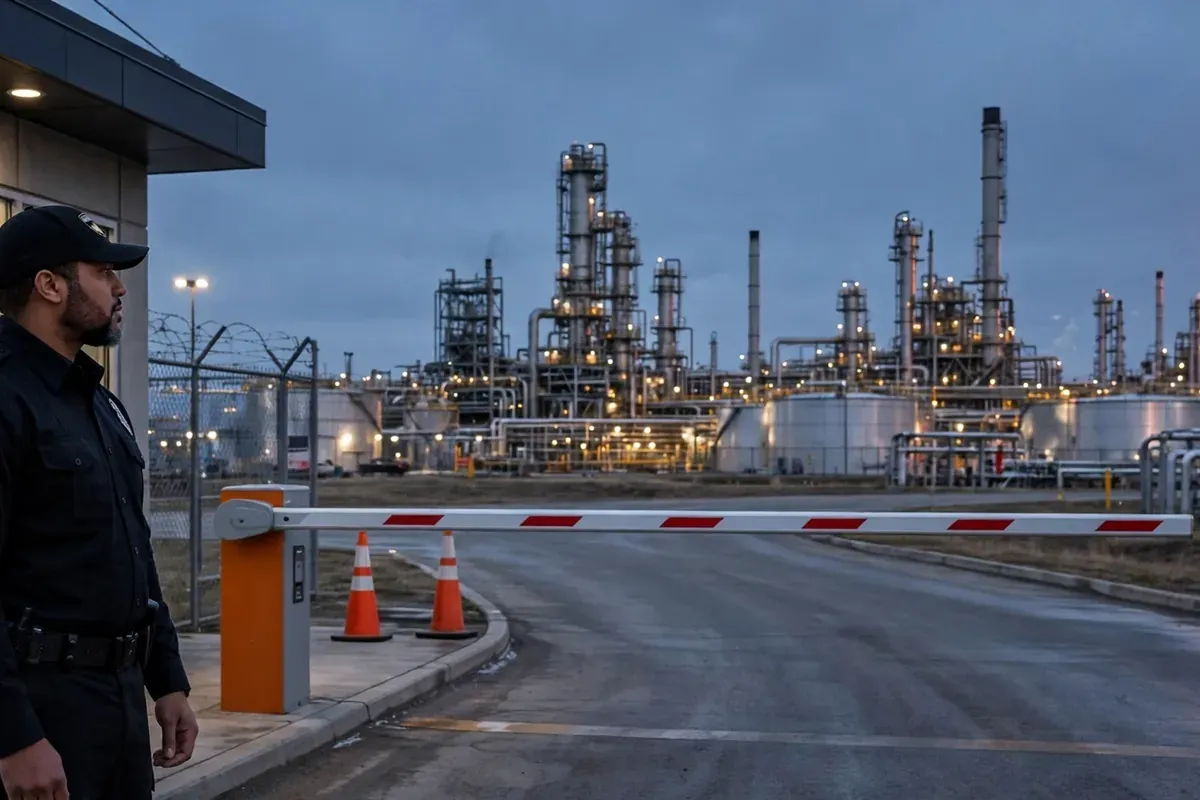
It is 2 a.m. on a cold November night at a petrochemical plant off Highway 15 near Fort Saskatchewan, T8L, and the gatehouse alarm has gone off for the second time in one shift. A patrol guard checks the fence line, finds a cut section near the rail spur, and calls it in before anyone gets near the process units. Our Canadian Shield Security team plans plant coverage from our Edmonton base at 3536 33 Ave NW, Mill Woods, T6L 5G6, and we cover Fort Saskatchewan, Strathcona County and the Industrial Heartland around the clock.
This guide is for a facility manager, plant supervisor or project lead who has to keep a petrochemical site safe in Fort Saskatchewan. It covers what makes these plants different from a warehouse or an office, the layers of security that work, what Alberta law requires, and what to do in the first hour after an incident. Our industrial security service and our camp site security service work together across the region, day and night.
A security failure at a petrochemical plant costs more than stolen tools. A break-in near process units can shut down a unit, trigger an evacuation, and bring regulators to your gate. Prevention costs far less than one shutdown.
Petrochemical facility security in Fort Saskatchewan means layered protection: a staffed gatehouse with badge checks, fenced perimeters with CCTV, alarm monitoring, and after-hours patrols by SSIA-licensed guards. Plants in Alberta's Industrial Heartland also need WHMIS-aware guards, contractor sign-in rules, and extra cover during turnarounds. The strongest setup pairs physical barriers with guards who know the site.
Why Fort Saskatchewan Plants Need Special Security
Fort Saskatchewan sits in Alberta's Industrial Heartland, the largest Canadian industrial area west of Toronto. Dow runs a 2,128-acre petrochemical site here, and its Path2Zero project is building a new net-zero ethylene complex on the same ground. Shell Scotford, 40 kilometres northeast of Edmonton, runs a bitumen upgrader, a refinery, a chemicals plant and the Quest carbon capture facility, and has operated near Fort Saskatchewan for more than 40 years. Inter Pipeline runs the Heartland Petrochemical Complex, a $4 billion plant near the city that turns propane into 525,000 tonnes of polypropylene a year.
These plants are not warehouses. They hold hazardous materials, high-value equipment and process units that cannot stop without cost. A single site can have hundreds of contractors on the ground during a turnaround, plus rail cars, tank trucks and deliveries at all hours. That mix of hazard, value and traffic is why plant security needs its own plan.
The Layers of Petrochemical Facility Security
No single measure protects a plant. Security works in layers, so a failure in one layer is caught by the next. Walk your site from the outside in: the fence, the gate, the yard, the process units and the control room.
| Security Layer | What It Covers | Why It Matters |
|---|---|---|
| Perimeter fence and gates | Fencing, locked gates, clear sightlines, no pallets stacked by the fence | Slows entry and removes cover for intruders |
| Gatehouse and access control | Badge checks, vehicle searches, contractor sign-in, visitor escorts | Only authorised people reach the process units |
| CCTV and alarm monitoring | Cameras at gates, fences and units, monitored alarms, off-site recording | Raises the alert in minutes and keeps the evidence |
| Patrols and on-site guards | Random patrols, fence-line checks, gate cover, incident reports | A guard on the spot stops trouble before it spreads |
| Lighting and signage | Bright lights at gates, corners and tank farms, clear warning signs | Lit sites are passed over for darker ones |
| Turnaround and shutdown cover | Extra guards, badge audits, 24/7 posts during shutdowns | Hundreds of extra workers need extra checks |
Gatehouse and Access Control
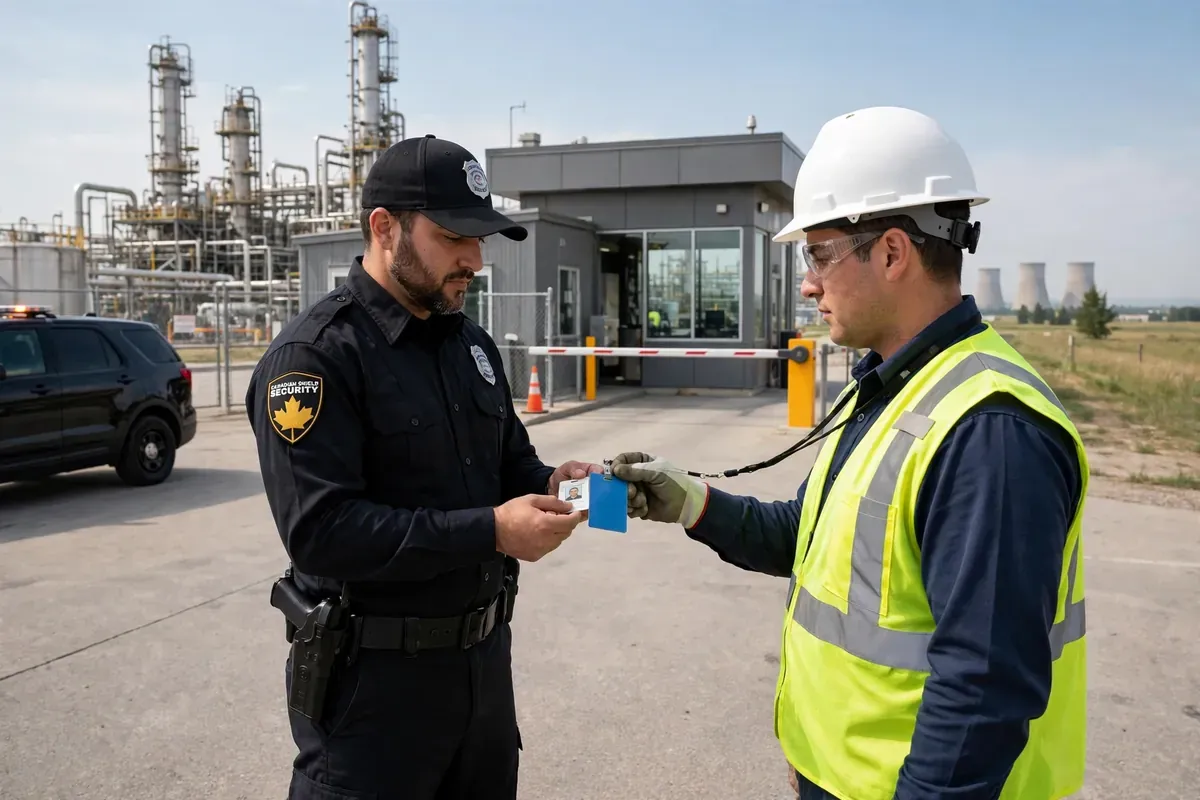
The gatehouse is where plant security starts. Every person and vehicle that enters must pass a check: a badge scan, a look at the load, and a sign-in that records who is on site and where they are working. Contractors get a temporary badge and an escort if they are new to the site. Deliveries are checked against a list before the gate opens.
Badges and lists only work if they are kept current. Collect badges when a contractor leaves, cancel access the same day, and audit the access list every month. A badge that still works after a worker has left is a gap in your fence. Our WHMIS security guide explains the training guards need before they work around hazardous materials.
Patrols, CCTV and Alarm Monitoring
Patrols work because intruders cannot time them. A patrol guard visits at random intervals, checks the fence line and every gate, walks the tank farm, and logs each check. The patrol vehicle at the gate is a clear sign the site is watched. Our mobile patrol service runs these checks across Fort Saskatchewan, Strathcona County and Edmonton industrial zones.
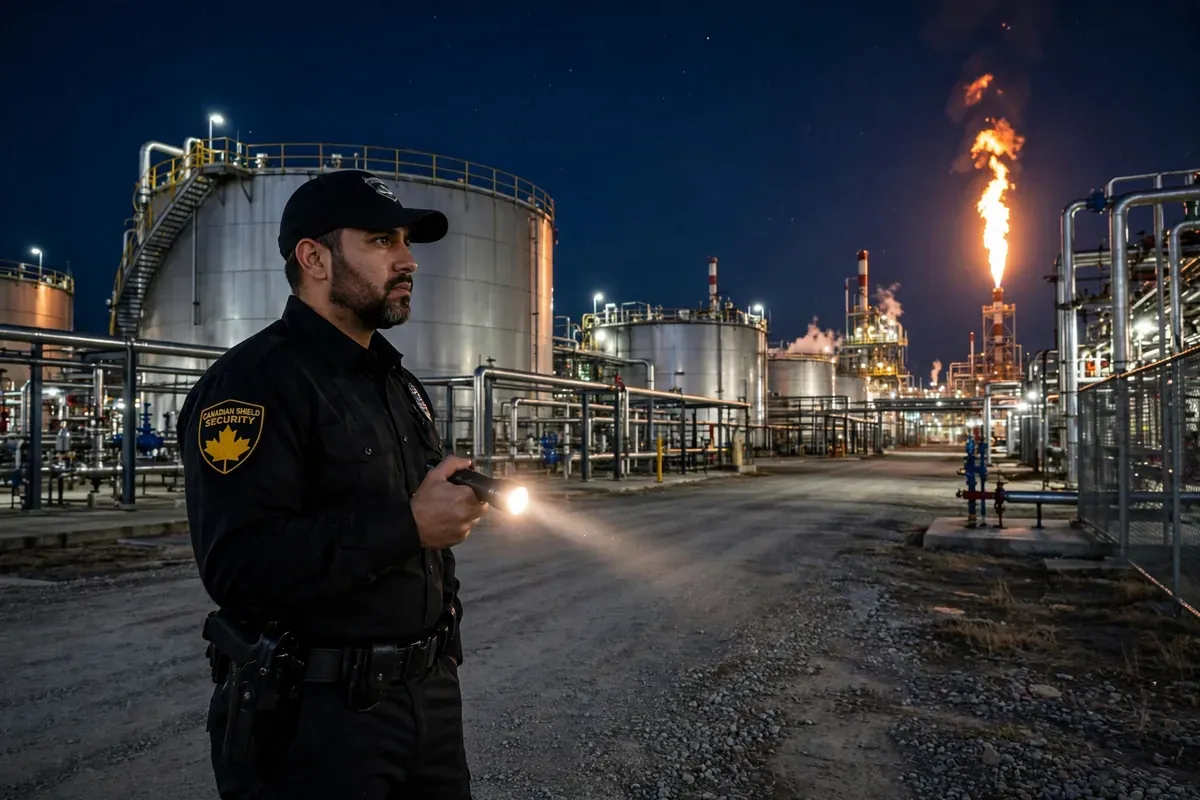
Cameras must cover every gate, fence corner and process unit, and the recording must be stored off site so a stolen recorder does not take the evidence with it. Check every camera weekly, because a dead camera is no help after an incident. A camera nobody watches is only a record, not protection, so pair cameras with live monitoring and our alarm response service.
WHMIS, OHS and the Rules Guards Must Follow
Every guard at your plant must hold a licence. Under the Security Services and Investigators Act (Alberta), a guard must complete an approved training course, score 80 percent or higher on the provincial exam, and hold a licence that costs $100 and lasts two years. Applicants must be 18 or older, eligible to work in Canada, fluent in English, and free of a criminal record. Guards must carry the original licence card while working. See the official licensing page.
Canadian Shield Security holds SSIA business licence B001449, and every guard we place at a plant holds an individual licence of their own. Ask any security company for its business licence number before you sign, and check that the guards it sends carry their cards.
Petrochemical sites add two more rules. Guards need WHMIS 2015 awareness training before they work around hazardous materials, and the Alberta Occupational Health and Safety Act sets the safety duties for everyone on site, including guards. A guard who does not know the site safety rules is a risk, not a help.
One honest limit matters here. For an active incident with fire, gas or injury, always call 911 and the plant emergency team first. SSIA-licensed security guards are trained to observe and report, and they do not replace emergency services.
Turnarounds, Shutdowns and Extra Crews
A turnaround brings hundreds of extra workers onto a plant for weeks. Extra guards, badge audits and 24/7 gate cover keep the site safe while the work goes on. Plan the extra cover before the turnaround starts, not after the first incident. Our oil sands camp security guide applies the same thinking to remote Alberta sites.
What to Do in the First Hour After a Security Incident
- Call 911 and the plant emergency team first if there is fire, gas, injury or an intruder still on site.
- Preserve the scene: do not touch gates, locks or broken fencing, and keep staff clear until the emergency team arrives.
- Save CCTV footage before it is overwritten, and note the exact times the alarm tripped.
- Walk the site with the guard and list every damaged gate and fence section and every missing item for the report.
- Call your insurer, then book a security review so the same entry point cannot be used twice.
Petrochemical facility security in Fort Saskatchewan is not a single lock on a single gate. It is a system: a fence and gate that slow entry, a gatehouse that checks every person, cameras and alarms that raise the alert, and guards who check the site at random times.
Are security guards at petrochemical plants in Fort Saskatchewan required to be licensed?
Yes. Every guard in Alberta must hold a licence under the Security Services and Investigators Act (Alberta). Guards complete an approved training course, pass a provincial exam at 80 percent or higher, and pass a criminal record check. The licence costs $100 and lasts two years, and guards must carry the card while working.
How much does petrochemical facility security cost in Fort Saskatchewan?
It depends on the size of the plant, the number of guards, the hours of cover, and whether you need a staffed gatehouse, mobile patrols, CCTV monitoring or all three. A large plant with a busy gate costs more than a small storage yard. Ask for a written quote that lists guards, hours and patrols.
Does Canadian Shield Security cover plants in Fort Saskatchewan and Strathcona County?
Yes. We cover petrochemical plants in Fort Saskatchewan, Strathcona County, Sherwood Park and Edmonton from our Edmonton base, day and night, with on-site guards and mobile patrols. Guards arrive licensed and briefed on your site rules. Call 1 (800) 326-7879 to arrange coverage for your plant today.
Do security guards at petrochemical plants need WHMIS training?
Yes. Guards working around hazardous materials need WHMIS 2015 awareness training so they can read labels, follow safety data sheets, and act safely near chemicals. Plants should also brief guards on site rules, muster points and emergency alarms before the first shift. Ask your security company to confirm WHMIS training before guards start work.
What security is needed during a plant turnaround or shutdown?
Turnarounds bring hundreds of extra workers, so plants need extra guards, 24/7 gate cover, badge audits and more frequent patrols. Every contractor should sign in, wear a badge and be escorted if new to the site. Plan the extra cover weeks before the shutdown starts, and review the access list every day.
Canadian Shield Security Editorial Team, Edmonton, Alberta
Canadian Shield Security guards petrochemical plants across Fort Saskatchewan, Strathcona County and Edmonton, 24/7. Free consultation -- call 1 (800) 326-7879 or request a free consultation.
