
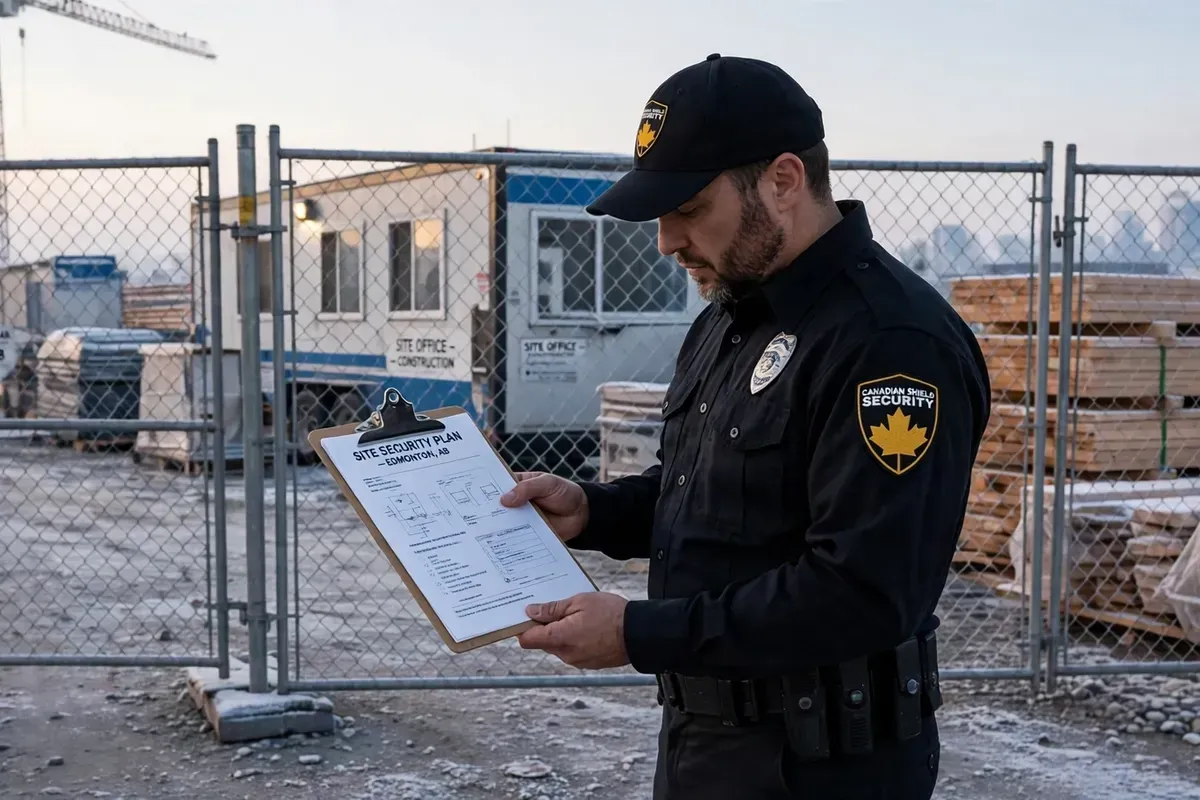
It is 7 a.m. on a Monday in late November, and a project manager opens the gate at a townhouse build in Chappelle, southwest Edmonton, T6W, to find the site office door forced and two pallets of copper pipe gone from the laydown area. The framing crew is due at 8 and the electrician cannot start. Our Canadian Shield Security team plans construction cover from our Edmonton base at 3536 33 Ave NW, and we hear this story from builders across the city every month.
This guide shows a project manager how to build a construction security plan that works on a real Alberta site: the risks to map, the fence and gates to set, who gets in, and what cover runs at night. Our construction site security service protects active builds across Edmonton, and our construction site security cost guide gives 2026 market rates for guards and patrols before you budget.
A security plan is a written document, not a fence. It names who is in charge, what is worth stealing, where the gaps are, and what happens when an alarm trips at 2 a.m. Under Alberta's Occupational Health and Safety Act, a construction site with two or more employers must have a prime contractor who coordinates health and safety, and your security plan sits inside that duty.
A construction security plan in Alberta is a written document that maps site risks, sets fencing and access control, assigns guards or patrols, and records what happens when an alarm trips. Start with a site walk, list what is worth stealing, and fix the fence, gates and lighting first. Review the plan at every build stage and after any incident.
What a Construction Security Plan Is
A construction security plan is a short, plain document that every person on site can follow. It lists the site risks, the perimeter and gates, who may enter and how, what cover runs after hours, and the exact steps when something goes wrong. The prime contractor, the site superintendent, the guards and the sub trades all work from the same page, so nothing depends on one person's memory.
Step 1: Walk the Site and Map the Risks
Start before the first trade arrives. Walk the whole site with the superintendent and write down every way in and every thing worth taking. Copper pipe and wire, tools, fuel, lumber, appliances and small machinery top the list on most Edmonton builds. Note the blind spots too: the back fence behind the laydown area, the lane with no lights, the gate the delivery trucks use.
Alberta law backs this walk. The Occupational Health and Safety Code requires an employer to assess the work site and identify existing and potential hazards before work begins, prepare a written report of the results and the controls, and repeat the assessment when the work changes. Security risks belong in that same habit: write them down, control them, and review them. Our equipment theft prevention guide shows which items thieves target first on Edmonton sites.
Step 2: Set the Perimeter: Fencing, Hoarding and Gates
Fix the perimeter before you spend a dollar on guards. A fence with locked gates and clear sightlines stops most casual theft on its own. In Edmonton, hoarding placed on public land needs a building permit under the National Building Code-2023 Alberta Edition and Bylaw 15894, so check the permit before hoarding goes up on a sidewalk or road allowance. Hoarding on private property is not part of that permit. See the City of Edmonton hoarding guide.
Step 3: Control Who Gets In: Access Control and Sign-In
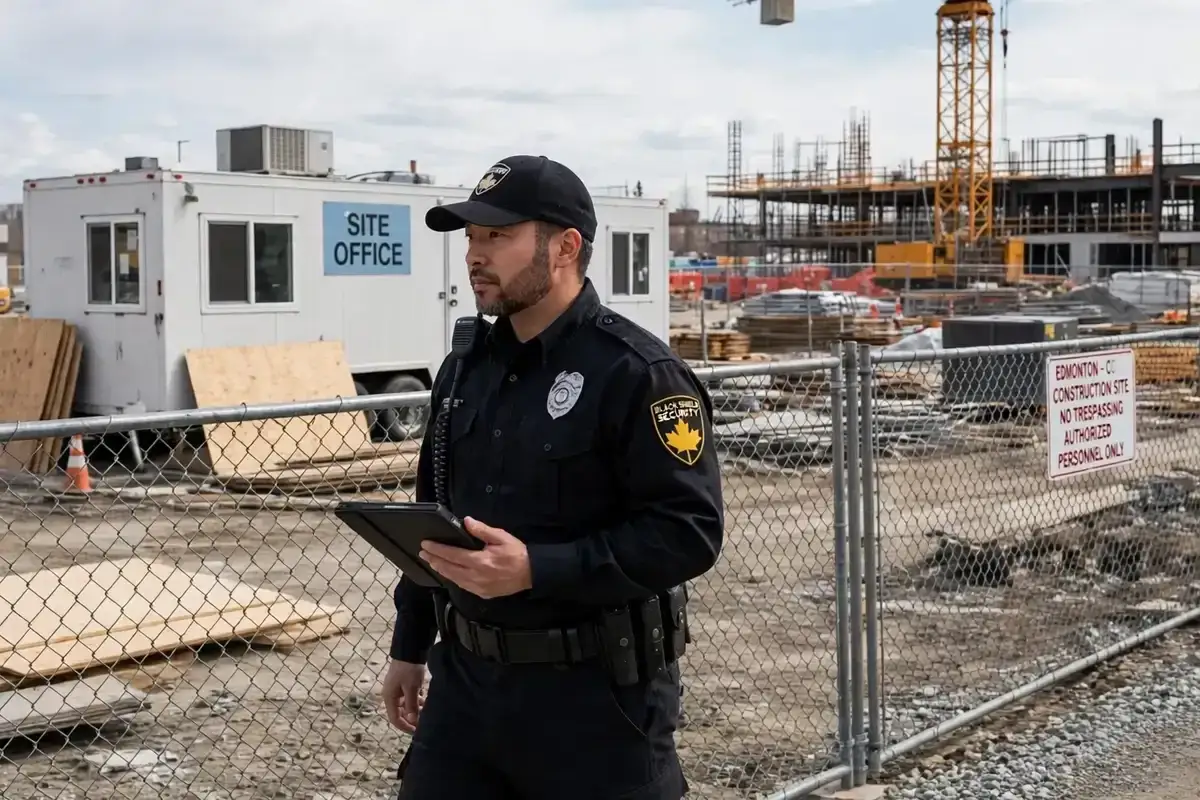
A gate that anyone can open is not a gate. Every person who enters should sign in with a name, company, time in and time out, and every delivery should be booked in advance with the superintendent. Badges or a simple sign-in sheet both work, as long as someone checks the sheet at the end of the day and follows up on names that do not match the trade list.
Step 4: Choose Your Cover: Guards, Patrols and CCTV
Pick cover that fits the risk, not the budget line. An on-site guard gives continuous cover at the gate and on the yard, a mobile patrol gives scheduled checks through the night, and CCTV records what happened. Published Edmonton guides list construction site security at $20 to $28 an hour, mobile patrol at $20 to $27, and fire watch at $22 to $30. Our mobile patrol service and construction site security cost guide set out the trade-offs in full.
Step 5: Plan for Nights, Weekends and Shutdowns
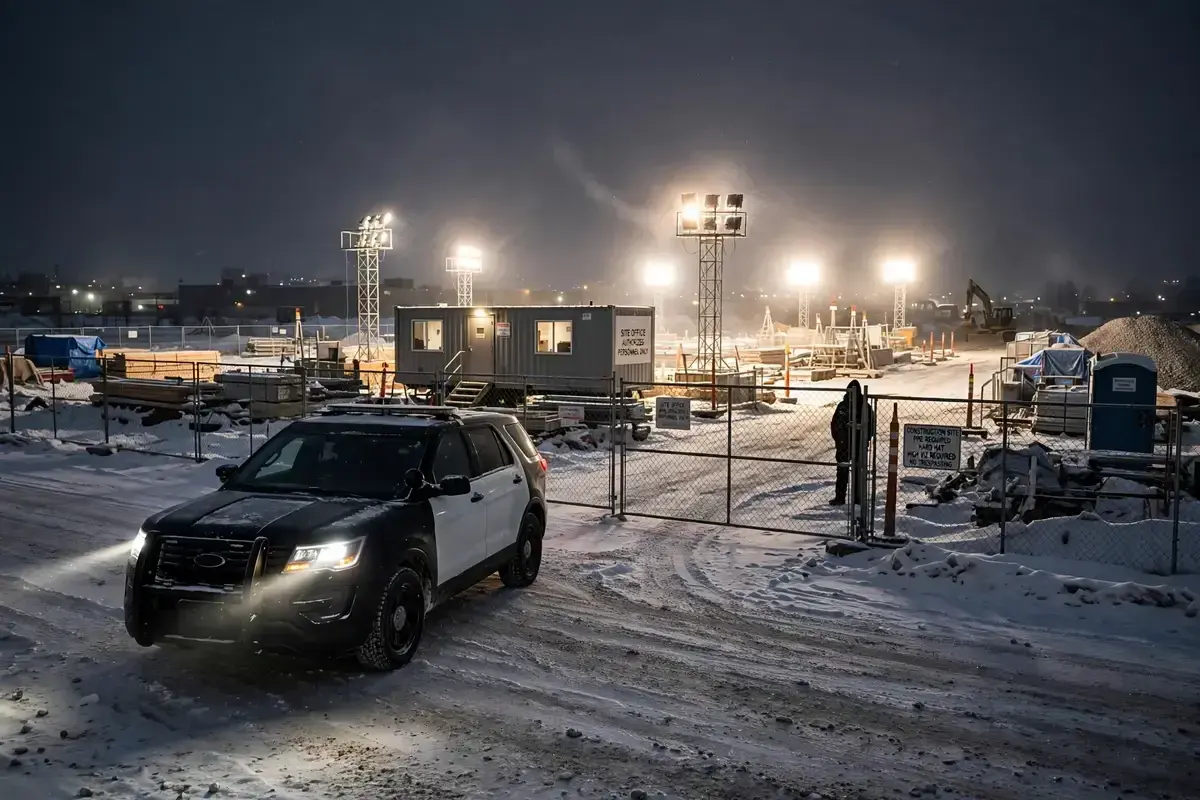
Most site theft happens when nobody is there, so the plan must cover the hours the crew is not. Write a lock-up checklist for the end of each day: gates locked, containers locked, keys in the safe, alarm set, lights on. Name the person who checks it and the person who checks the checker. A checklist with no owner is a piece of paper.
Step 6: Write the Incident and Emergency Response Section
When an alarm trips at 2 a.m., nobody should have to guess. The plan should list the call order: alarm company first, then the guard or patrol, then the site superintendent, then the prime contractor, then police if a break-in is confirmed. Put the numbers on the first page of the plan and on the site office wall. Our alarm response service covers night calls across Edmonton when a site alarm trips.
Licences and the Law: SSIA and the OHS Act
Every guard on your site must hold a licence. Under the Security Services and Investigators Act (Alberta), a guard must complete an approved training course, score 80 percent or higher on the provincial exam, and hold a $100 licence that lasts two years. Applicants must be 18 or older, eligible to work in Canada, fluent in English and free of a criminal record, and guards must carry the original card while working. See the official licensing page.
Canadian Shield Security holds SSIA business licence B001449, and every guard we place on a site holds an individual licence of their own. Ask any company for its business licence number before you sign, and check the guards it sends carry their cards on the first shift. Unlicensed cover is illegal in Alberta, and it leaves you exposed if something goes wrong.
On the safety side, the prime contractor rule is the one to know. Every construction work site must have a prime contractor when two or more employers work at the site, and the person in control of the site must designate the prime contractor in writing and post it where everyone can see it. An employer who regularly employs 20 or more workers must also have a health and safety program. See the Alberta prime contractor guide.
A One-Page Plan Template
| Plan Section | What Goes In It | Who Owns It |
|---|---|---|
| Site risks | Copper, tools, fuel, lumber, machinery, open gates | Prime contractor |
| Perimeter | Fence, hoarding permit, gates, lighting, signage | Site superintendent |
| Access control | Sign-in log, badges, keys, delivery bookings | Site superintendent |
| Night cover | Guard, patrol, CCTV, alarm response, lock-up list | Security provider |
| Incidents | Call order, police, log, scene care, review | Prime contractor |
How to Get Your Plan Written and Priced
- List the facts: site address, build dates, hours of cover, number of gates, and what is stored on site.
- Ask for a free site assessment and a written security plan with the hourly rate and monthly total.
- Check the company's SSIA business licence number and the guards' licence cards on the first shift.
- Agree the call order for alarms, the lock-up checklist and who holds the keys.
- Review the plan at every build stage and after any incident, and update it in writing.
A construction security plan in Alberta starts with a site walk, a fixed perimeter, controlled access and cover that fits the stage of the build. Put it in writing, name the people behind it, and review it when the site changes. Our consultation and planning service can walk your site and draft the plan with you, free of charge.
Are security guards on Alberta construction sites required to be licensed?
Yes. Every guard in Alberta must hold a licence under the Security Services and Investigators Act (Alberta). Guards complete an approved training course, pass a provincial exam at 80 percent or higher, and pass a criminal record check. The licence costs $100 and lasts two years, and guards must carry the card while working.
How much does a construction security plan cost in Edmonton?
A written plan is usually part of the security service and priced by quote, not sold on its own. The cover it sets out is priced by the hour: published Edmonton guides list construction guards at $20 to $28 an hour and mobile patrols at $20 to $27. Ask for a free site assessment and a quote for your build.
Does Canadian Shield Security cover construction sites in Leduc and Nisku?
Yes. We cover construction sites in Edmonton, Leduc, Nisku, Acheson and Fort Saskatchewan from our Edmonton base, day and night, with on-site guards and mobile patrols. Guards arrive licensed and briefed on your site rules, gates and storage areas. Call 1 (800) 326-7879 to arrange cover for your build today.
What should a construction site security plan include?
A construction site security plan should include a site risk list, the fence and gates, access control and sign-in rules, the guard or patrol cover for nights and weekends, and an incident response section with the call order. It should also name the prime contractor, the superintendent and the key holders, and carry a review date.
When should a construction security plan be reviewed?
Review the plan at every build stage, when a new trade starts, after any incident, and at least once a month on a long build. Each review should be dated and signed by the prime contractor and the superintendent, with changes written into the plan. Keep old versions so you can show what the plan said on any date.
Canadian Shield Security Editorial Team, Edmonton, Alberta
Canadian Shield Security writes security plans for construction projects across Edmonton, Leduc, Nisku, Acheson and Fort Saskatchewan, 24/7. Free consultation -- call 1 (800) 326-7879 or request a free consultation.
