
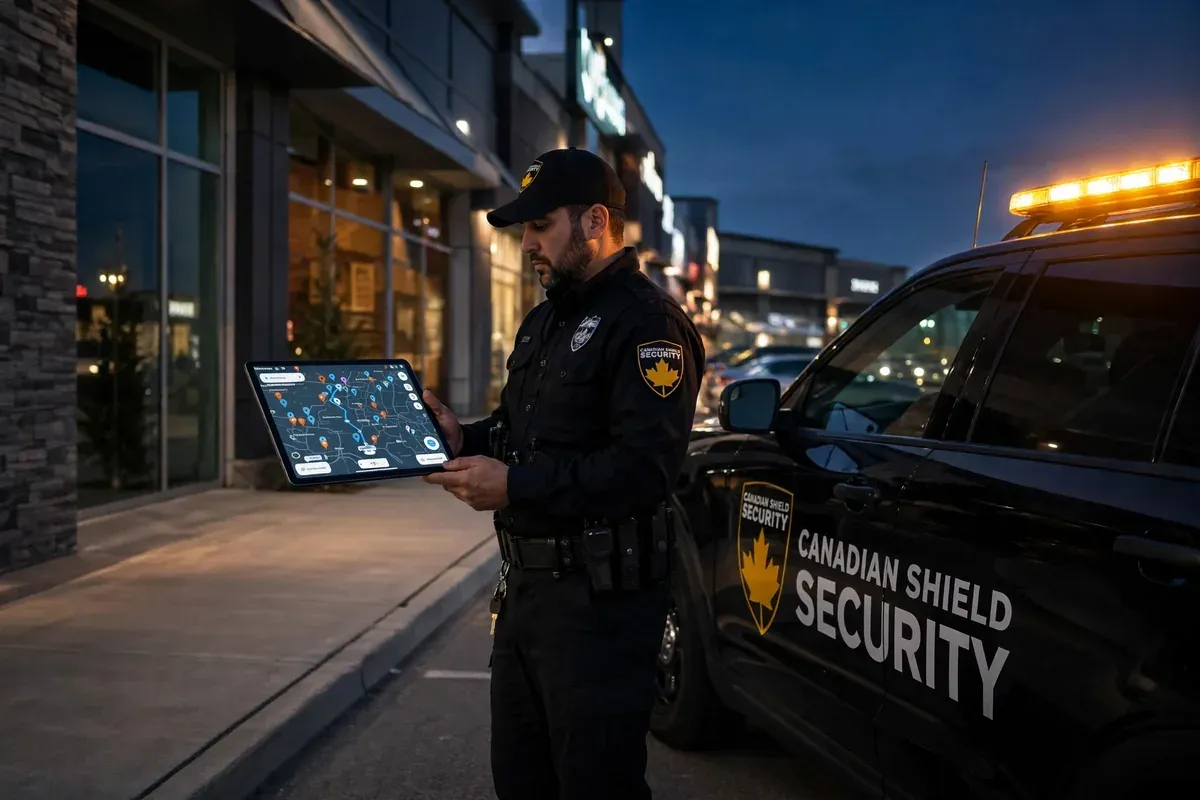
A facilities manager overseeing an office tower in Downtown Edmonton (T5J) had the building's fire alarm panel fail mid-renovation, on a Friday afternoon with no technician available until Monday. He called Canadian Shield Security's fire watch guards, who were on site within hours and kept the building legally occupied and compliant for the entire weekend.
A fire watch emergency is not optional to respond to. When your fire alarm or sprinkler system goes offline, the fire code does not give you a grace period, and continuing to occupy the building without proper alternative measures in place puts people, property, and your compliance record at real risk.
This guide covers exactly who to call the moment your system goes down, what the fire code actually requires, and what happens once a licensed fire watch guard arrives and begins covering your property.
|
FEATURED SNIPPET -- DIRECT ANSWER If your fire alarm or sprinkler system goes offline, call your local fire department, then call a licensed security company to deploy a fire watch guard immediately. Under the National Fire Code, Alberta Edition, a dedicated fire watch patrols the property at least every 60 minutes and stays in place until the fire protection system is fully restored. |
A Fire Watch Emergency Means Your Fire Alarm or Sprinkler System Is Offline
A fire watch emergency happens whenever your building's fire alarm or sprinkler system becomes impaired or inoperative, whether from a technical fault, scheduled maintenance, or a renovation that temporarily disconnects the system.
This is more common than most property owners expect. Alarm panel replacements, sprinkler head repairs, and even routine inspection and testing can all trigger an impairment window where the building's automatic fire protection is not functioning as designed.
The moment that happens, the building is not automatically unsafe to occupy, but it does require an alternative measure, and in almost every case, that alternative measure is a dedicated fire watch until the system is restored.
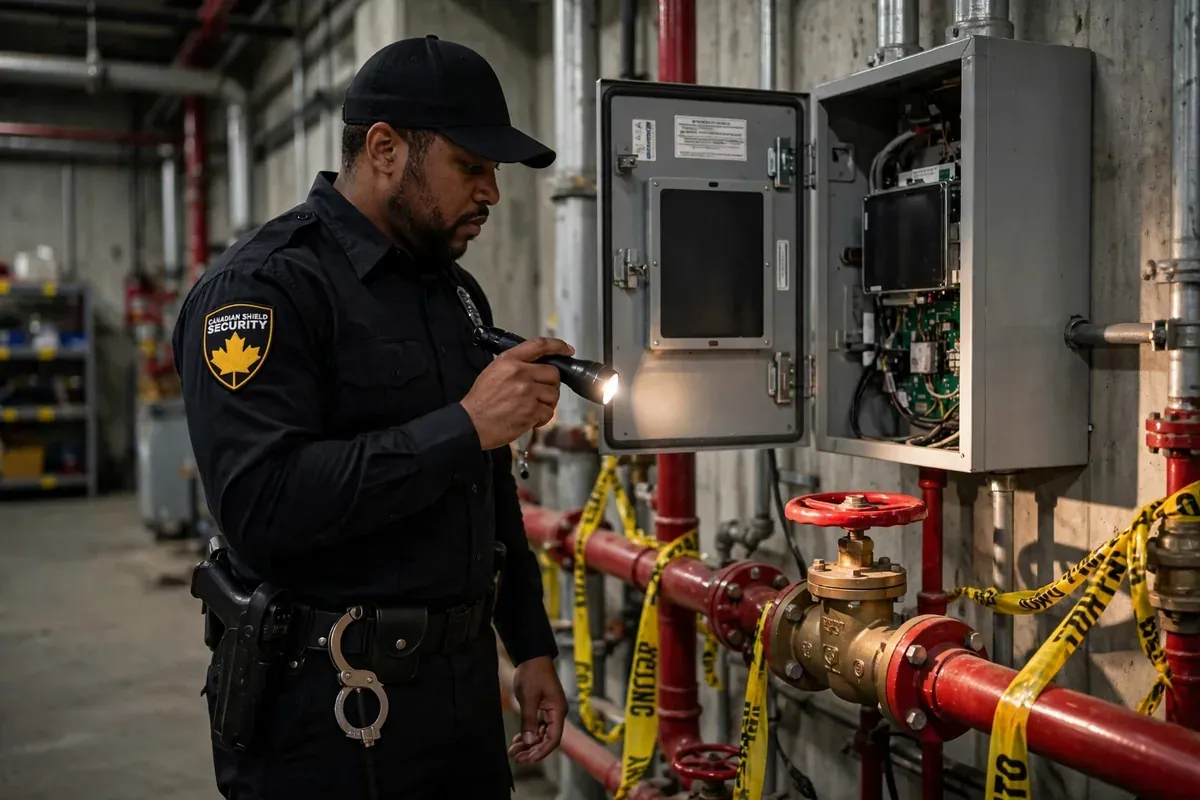
Downtown Edmonton (T5J) highrise buildings see this most often during major renovations, while sites near Nisku and Fort Saskatchewan see it during new construction phases before permanent fire alarm systems are fully commissioned.
A fire watch emergency can also be planned rather than sudden. A property manager scheduling sprinkler maintenance weeks in advance knows exactly when the impairment window will start, which is the easiest version of this situation to prepare for properly.
Hospitals, seniors' facilities, and other high-occupancy buildings face a stricter version of the same requirement, since the AHJ often mandates a shorter patrol interval or additional personnel for higher-risk occupancies, even for a brief planned impairment.
What Alberta's Fire Code Actually Requires During a Fire Watch
Under the National Fire Code, Alberta Edition (NFC(AE)), alternative measures are required whenever a fire alarm or sprinkler system is shut down or inoperative. These alternative measures are developed with the local fire department, referred to as the Authority Having Jurisdiction (AHJ), and normally take the form of a dedicated fire watch, as confirmed by the Alberta Safety Codes Council's published fire watch requirements guidance.
Fire watch personnel, whether a responsible employee or a contracted security guard, must have no other duties that interfere with the fire watch itself. Their sole job is recognizing an emergency, alerting occupants, and contacting 911, with a cell phone accepted as sufficient communication equipment.
The patrol requirement is specific: a sufficient number of fire watch personnel must complete at least one full patrol of the protected area, including stairwells, every 60 minutes or less, depending on the risk level and the AHJ's requirements. A documented process must track that the patrol route was actually completed each round.
|
AMBER -- NATIONAL STANDARDS This Alberta-specific patrol rule sits alongside national standards like NFPA 101, the Life Safety Code, and NFPA 25, which governs water-based fire protection systems and is often referenced when a sprinkler impairment is involved. Fire watch must continue until the fire alarm or sprinkler system is fully operational again, with no fixed maximum duration. |
Only the specific zones or areas affected by the shutdown actually require fire watch coverage. A building with an isolated sprinkler impairment on one floor does not necessarily need fire watch across the entire property, which is a detail the AHJ will confirm based on the actual system layout.
Documentation matters throughout. Fire watch personnel need a clear process for tracking each completed patrol, and that record often becomes the exact evidence an AHJ or insurer asks for after the fact to confirm coverage was actually maintained as required.
Who to Call and What Happens When You Call Us
The sequence below applies whether your alarm system went down during scheduled maintenance or failed completely unexpectedly overnight.
1. Contact your local fire department or the Authority Having Jurisdiction to report the impairment and confirm what alternative measures they require.
2. Call a licensed security company to deploy fire watch guards, ideally before the system goes offline if the outage is planned, or as quickly as possible if it is not.
3. Provide the fire watch team with your building's fire safety plan, including evacuation routes, extinguisher and hose cabinet locations, and any known hazard areas.
4. The fire watch guards begin patrolling the protected area on a schedule of 60 minutes or less, documenting each completed round.
5. Guards remain equipped with phone access to 911 at all times and are briefed on exactly what situations require immediate emergency notification.
6. Fire watch continues around the clock until your fire alarm or sprinkler system is confirmed fully operational, typically by a technician or the AHJ.
Most fire watch assignments run smoothly and end without incident, since the entire point of the coverage is bridging the gap safely until the real system comes back online.
|
GREEN -- KEY INSIGHT Do not wait for a formal notice before calling. If you know your system is about to be taken offline for planned work, arranging fire watch in advance avoids any window where the building is impaired with no coverage at all. |
Insurers reviewing a claim tied to a fire watch period will typically ask for documentation showing coverage was in place and patrols were completed on schedule. A licensed guard's logged patrol record gives you that proof automatically, rather than needing to reconstruct it after the fact.
Fire Watch Deployment Time and Cost in Edmonton
Deployment speed and cost depend on how many guards your building actually requires and how quickly coverage needs to start. The table below reflects typical Edmonton figures for planning purposes.
Fire Watch Deployment: Time and Cost in Edmonton
|
Situation |
Typical Deployment Time |
Typical Cost |
|
Emergency (system fails unexpectedly) |
2-6 hours |
$32-$48 per hour, per guard |
|
Planned (scheduled maintenance or renovation) |
Same day, pre-arranged |
$32-$48 per hour, per guard |
|
Extended coverage (multi-day renovation) |
Ongoing, scheduled shifts |
Custom quote, often daily or weekly rate |
Larger buildings or those with multiple stairwells and protected areas may need more than one guard to meet the 60-minute patrol requirement across the full footprint. A free site assessment confirms exactly how many officers your specific building needs before coverage begins.
Planned impairments almost always cost less overall than emergency ones, simply because scheduling in advance avoids any premium associated with urgent same-hour deployment and lets your provider allocate the right number of guards from the start.
What a Fire Watch Guard Can and Cannot Do
A fire watch guard can patrol the property, recognize signs of fire or smoke, alert occupants, contact 911, and document conditions throughout the impairment period. They are trained to know the building's fire safety plan, extinguisher and hose cabinet locations, and evacuation routes before their shift even starts.
|
AMBER -- TRUST / LIMITATION A fire watch guard cannot repair the fire alarm or sprinkler system, and their presence does not eliminate the underlying risk the system is meant to cover. Fire watch is explicitly a temporary bridge measure, not a permanent substitute for a functioning fire protection system. |
Canadian Shield Security's fire watch guards are the same SSIA-licensed officers who staff our mobile patrol and on-site guard services, trained specifically in fire watch protocols on top of standard licensing requirements.
Every officer completes a background check before deployment, which matters given that a fire watch guard may be the only person actively monitoring an entire occupied building overnight during an impairment.
Getting Your Fire Protection System Back Online Faster
The fastest way to end a fire watch assignment is coordinating closely between your fire alarm technician, the AHJ, and your fire watch provider so the moment repairs are complete, an inspection can confirm the system is operational.
For active construction sites, pairing fire watch with construction site security coverage means the same team already on site can absorb fire watch duties during system commissioning, rather than adding an entirely separate provider mid-project.
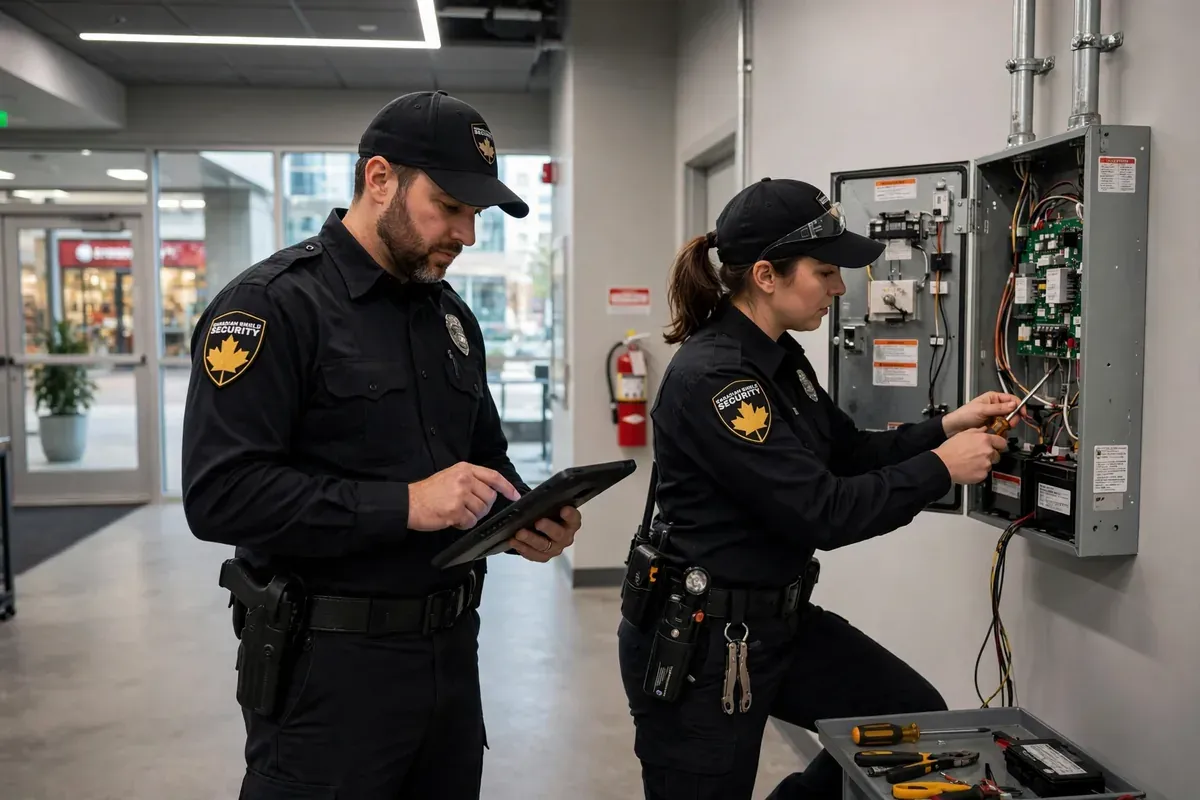
Edmonton winters add pressure to renovation timelines, since cold-weather construction schedules often compress inspection windows. Buildings undertaking major renovations through the winter months should plan fire watch coverage as part of the schedule from the start, rather than scrambling once the alarm system is already down.
Keeping a single point of contact between your building, the fire watch provider, and the technician also speeds things up. When all three parties are updating one person instead of playing phone tag across departments, the final sign-off inspection tends to happen the same day repairs finish rather than days later.
Conclusion
A fire watch emergency is stressful, but the response itself is straightforward: notify the AHJ, call a licensed security company, and keep the building safely occupied and compliant until your fire alarm or sprinkler system is fully restored.
Canadian Shield Security deploys SSIA-licensed fire watch guards across Edmonton 24/7, with a free consultation to confirm exactly what your building needs. Call 1 (800) 326-7879 the moment your system goes offline.
|
SOFT CTA Canadian Shield Security serves Edmonton 24/7. Free consultation -- no hidden fees. Call 1 (800) 326-7879. |
Frequently Asked Questions
Do fire watch guards need to be SSIA licensed in Alberta?
Yes. Every fire watch guard Canadian Shield Security deploys holds a valid licence under the Security Services and Investigators Act (Alberta), on top of specific fire watch training in patrol procedures, emergency communication, and fire safety plan familiarization. Licensing does not change under fire watch assignments; the same SSIA standard applies to every deployment.
How much does emergency fire watch cost in Edmonton?
Emergency fire watch in Edmonton typically costs $32-$48 per hour per guard, depending on the number of personnel required and how quickly deployment is needed. Canadian Shield Security offers a free site assessment to confirm exactly how many guards your building needs, with no hidden fees added once coverage begins.
Does Canadian Shield Security provide fire watch in Nisku or Fort Saskatchewan?
Yes. Canadian Shield Security provides emergency fire watch coverage across Edmonton and surrounding industrial areas, including Nisku, Acheson, Fort Saskatchewan, and Leduc. We can typically deploy fire watch guards within hours of your call, with GPS-documented patrol logs to support your compliance record with the local fire department.
How often must a fire watch guard patrol the building?
Under the National Fire Code, Alberta Edition, fire watch personnel must complete at least one full patrol of the protected area, including stairwells, at intervals of 60 minutes or less. The exact frequency can be shortened further at the discretion of the local fire department based on the specific risk level.
How long does a fire watch need to stay in place?
Fire watch must remain in place until the fire alarm or sprinkler system is fully operational again, as confirmed by the fire department or a qualified technician. There is no fixed time limit, since fire watch is meant to bridge the gap until the actual fire protection system is restored, not replace it.
