
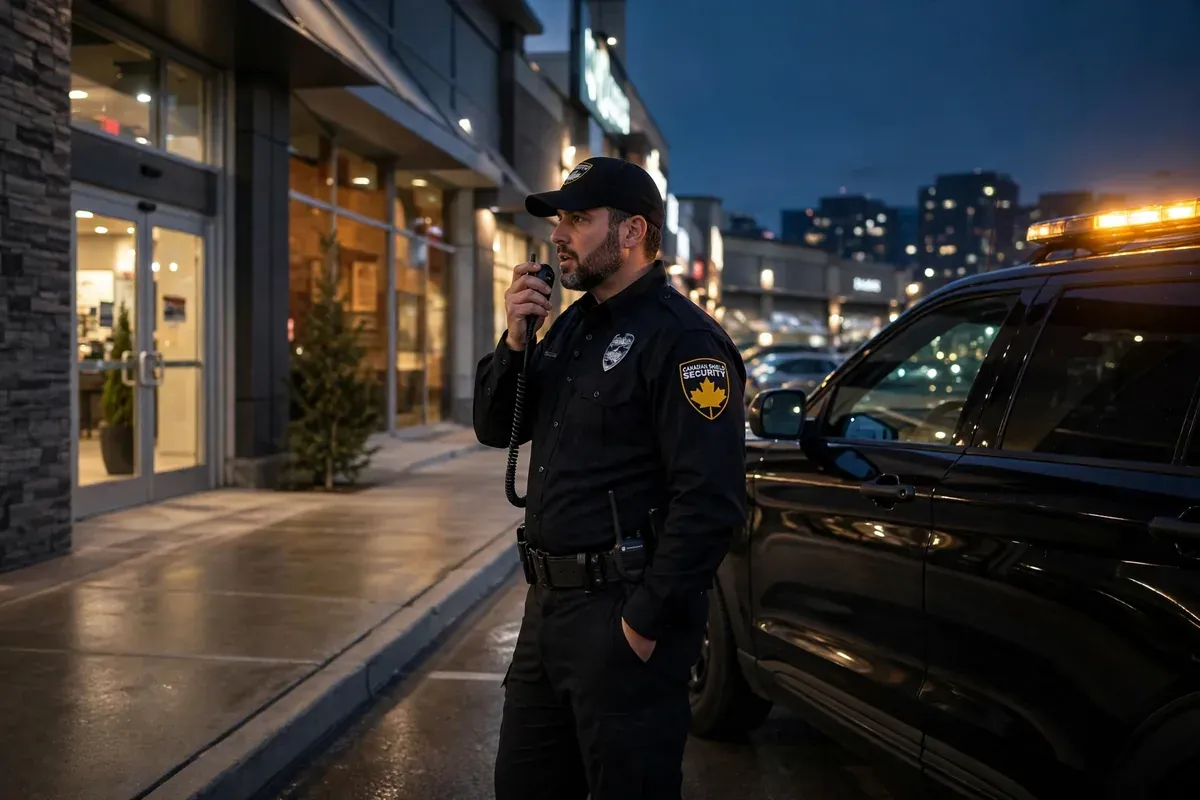
A site manager overseeing a mid-rise build near Nisku Industrial Park (T9E) arrived one morning to find a site trailer forced open and two battery packs missing from a skid steer. He called Canadian Shield Security's mobile patrol unit to secure the site for the rest of that day while police processed the scene, and added nightly patrol checks before the next shift started.
Construction sites are some of the easiest targets in Edmonton: valuable equipment, open perimeters, and long stretches with no one on site. A single break-in rarely ends a project, but the second and third one, on an unsecured site, absolutely will.
This guide covers what to do tonight if your site has already been hit, what actually makes Edmonton sites vulnerable, and how to build ongoing coverage so this does not happen again next week.
|
FEATURED SNIPPET -- DIRECT ANSWER If your construction site was broken into overnight, secure the perimeter first and avoid moving anything until police arrive. Call 911 if the intruder may still be there, then call a licensed security company to dispatch a guard for the rest of the night. Document the damage with photos before starting cleanup. |
A Construction Site Break-In Usually Means Equipment or Copper Theft
A construction site break-in almost always targets one of three things: heavy equipment and attachments, copper wiring and pipe, or hand tools and small machinery left in a site trailer overnight.
Copper has become a particularly common target as prices have climbed toward record highs, making even a modest length of wiring worth the risk to a thief. Recent Alberta cases have involved recovered equipment worth hundreds of thousands of dollars from a single property, which shows how organized this activity has become.
Skid steers, track loaders, and other easily transportable equipment are stolen more often than large excavators, since they can be loaded onto a trailer and gone within minutes. Industry-wide, only a small fraction of stolen equipment is ever recovered once it leaves the site.
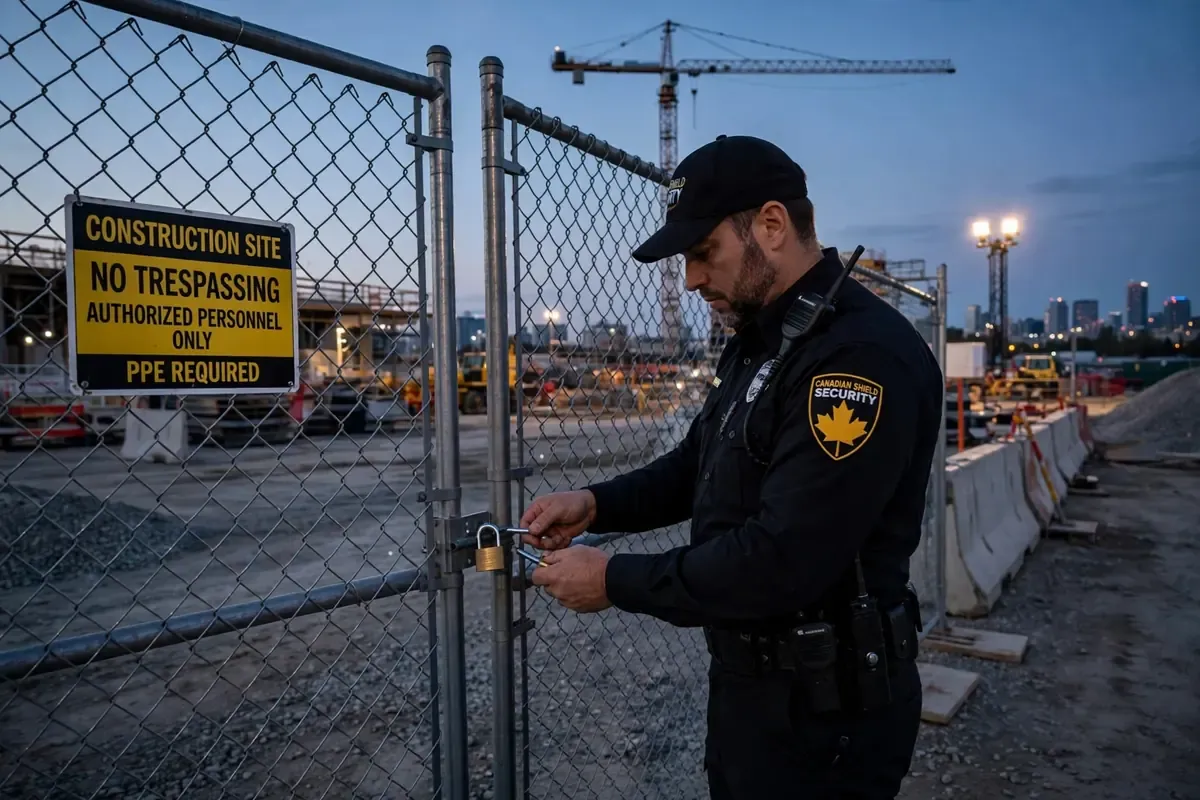
Sites near Nisku and Acheson see a specific pattern: large, partially fenced lots with equipment parked in the open overnight, which is exactly the profile thieves look for. Pairing a fenced perimeter with construction site security patrols closes that gap far faster than fencing alone.
Downtown Edmonton (T5J) highrise projects face a different profile again. Vertical sites with restricted street access see less equipment theft but more materials theft from ground-floor storage, since a thief on foot cannot easily move a skid steer but can walk off with power tools or copper spools in a duffel bag.
Why Edmonton Construction Sites Are Easy Targets
Under Alberta's Occupational Health and Safety Act, every employer must, as far as reasonably practicable, protect the health and safety of workers and other people at or near the work site. That duty is about worker safety first, but a secure, controlled site also happens to be a harder site to steal from.
Separately, the Alberta Building Code requires a strongly constructed fence at least 1.8 metres high around most active construction and demolition sites, enforced by municipal Safety Codes Officers. Fencing satisfies that requirement, but it was never designed to stop a determined thief with bolt cutters and a trailer.
Long stretches with no one on site are the real driver. A downtown highrise project might have security cameras and a night watchman, but a suburban subdivision build often sits completely empty from 6 p.m. to 6 a.m., which is exactly the window most break-ins happen in.
|
AMBER -- SEASONAL RISK Edmonton winters add a seasonal wrinkle too. Shorter daylight hours mean more of a site's active hours happen in darkness, and heated site trailers become an attractive shelter target on nights approaching -40C, on top of the equipment theft risk itself. |
None of this means a site is doomed to be hit. It means the sites that budget for security as part of the project plan, rather than adding it only after a first break-in, are the ones that avoid becoming a repeat target in the first place.
How to Secure Your Site Tonight
If your site has already been hit, the priority is stopping further loss tonight while preserving the scene for police in the morning.
1. Call 911 if there is any chance the intruder is still on site, or if anyone working late is in danger.
2. Once the scene is safe, call a licensed security company to dispatch a guard or mobile patrol unit for the rest of the night.
3. Do not move damaged equipment, broken locks, or disturbed materials until police have documented the scene, even if it is tempting to start cleanup.
4. Photograph everything you can see without touching it: forced gates, broken windows, empty equipment pads, tire tracks.
5. Check whether any GPS-tracked equipment shows movement after hours, since that data can help police locate stolen machinery quickly.
6. Update your keyholder and site contact list before the next shift starts, in case the crew needs to reach someone overnight going forward.
A licensed guard on site overnight does two things at once: it deters a repeat visit from the same thief, and it gives your insurer a documented, secured scene rather than an empty lot until morning.
|
GREEN -- KEY INSIGHT Do not assume a break-in is a one-time event. Sites that get hit once and see no visible change in security are hit again far more often than sites that add a guard or patrol the same week. |
Insurance adjusters handling equipment theft claims consistently ask for documentation: photos, a police file number, and ideally a security incident report. A guard's timestamped notes from the night of the break-in give you all three without extra effort.
Construction Site Security Response Time and Cost in Edmonton
Cost and response time depend on whether you need an emergency overnight dispatch or an ongoing patrol schedule built into your project timeline. The table below reflects typical Edmonton figures.
Construction Site Security: Time and Cost in Edmonton
|
Service |
Typical Response Time |
Typical Cost |
|
Mobile Patrol Rapid Response |
15-30 minutes |
$28-$45 per hour |
|
On-Site Guard Deployment |
30-60 minutes |
$32-$48 per hour |
|
Scheduled Overnight Patrol (ongoing) |
Nightly, per route |
Custom quote, often monthly |
Canadian Shield Security uses GPS dispatch to route the closest available officer, which is why sites in South Edmonton (T6H) typically see the fast end of these windows, while Nisku and Leduc-area sites (T9E) may sit closer to the upper end depending on the time of night.
Most active construction sites in Edmonton find that a scheduled nightly patrol costs less over a project's duration than repeated emergency dispatch calls, especially once equipment theft has already happened once.
Larger sites with multiple equipment pads sometimes combine both: a scheduled patrol for the bulk of the project, with rapid mobile patrol dispatch available on top of that coverage for any after-hours alarm trigger or suspicious activity report from a neighbouring site.
When to Call Edmonton Police vs a Security Guard
Call Edmonton Police Service, or 911 in an active emergency, whenever there is any chance the intruder is still on site, whenever anyone working late feels unsafe, or once you discover a completed theft that needs a police file number for insurance.
|
AMBER -- TRUST / LIMITATION Call a security guard first for lower-risk situations: securing an empty site overnight after a break-in, deterring a suspected repeat visit, or providing scheduled coverage so no one has to discover the next incident cold in the morning. SSIA-licensed guards observe, document, and secure the scene, but they do not replace police authority for an active crime in progress. |
Canadian Shield Security's 32+ licensed officers cover Edmonton and surrounding industrial areas 24 hours a day, including nights, weekends, and public holidays, with a free site assessment and fire watch security available for sites that also need compliance coverage during hot work or offline sprinkler systems.
Every officer completes a background check before deployment, which matters on a site where a guard may be handling keys, gate codes, and access to expensive machinery overnight without direct supervision.
Preventing the Next Break-In With Ongoing Site Security
Preventing a repeat break-in starts with treating the first one as a warning rather than bad luck. A scheduled nightly patrol, proper perimeter fencing, and GPS tracking on high-value equipment work together far better than any single measure alone.
Pairing patrol visits with construction site security post orders, a documented checklist covering gates, trailers, and equipment pads on every visit, means every officer checks the same points rather than relying on memory of the site layout.
GPS tracking on skid steers, generators, and other easily moved equipment has been shown to meaningfully cut theft rates when paired with geofencing alerts, since a moving asset outside its normal hours triggers an alert before the crew even notices it is gone.
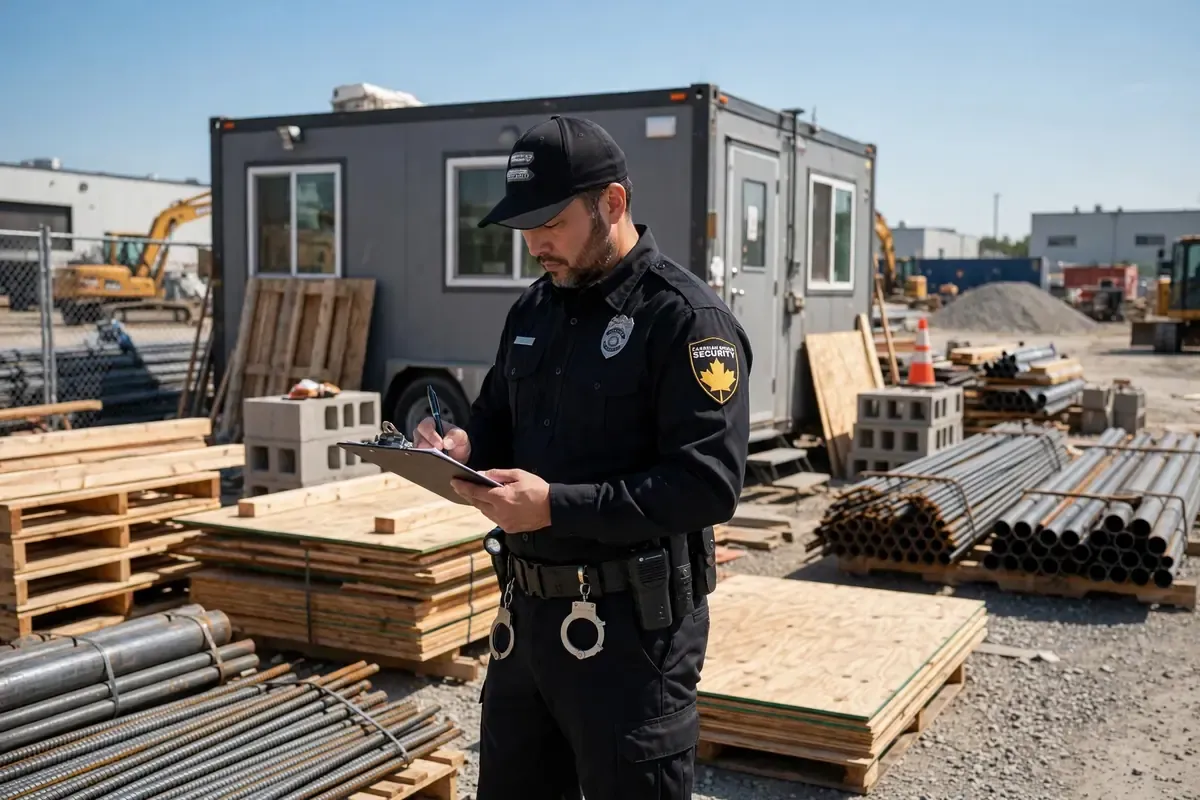
Sites in Fort Saskatchewan and other petrochemical-corridor areas often add extra patrol frequency specifically through the winter months, when shorter daylight hours and shelter-seeking trespass both increase the overnight risk profile.
The cost of ongoing coverage is almost always smaller than the cost of a second theft. A single stolen skid steer or a run of copper wiring can easily exceed months of scheduled patrol fees, which is the math most site managers only run after the first break-in rather than before it.
Conclusion
A construction site break-in is frustrating, but the response is straightforward: secure the site tonight, document everything for police and insurance, and build ongoing coverage so the same site is not hit again next month.
Canadian Shield Security serves Edmonton and surrounding industrial areas 24/7 with SSIA-licensed guards and a free consultation for every site. Call 1 (800) 326-7879 tonight to secure your site, or to set up ongoing patrol coverage before the next incident.
|
SOFT CTA Canadian Shield Security serves Edmonton 24/7. Free consultation -- no hidden fees. Call 1 (800) 326-7879. |
Frequently Asked Questions
Do construction site security guards need to be SSIA licensed?
Yes. Every guard Canadian Shield Security deploys to a construction site holds a valid licence under the Security Services and Investigators Act (Alberta). Guards complete background checks and training in access control, incident reporting, and use of force before working any active job site, whether downtown or in an industrial park.
How much does construction site security cost in Edmonton?
Construction site security in Edmonton typically costs $32-$48 per hour for on-site guard coverage, or $28-$45 per hour for mobile patrol checks, depending on site size and risk level. Canadian Shield Security offers a free site assessment to recommend the right coverage level, with no hidden fees added afterward.
Does Canadian Shield Security cover construction sites in Nisku or Acheson?
Yes. Canadian Shield Security protects construction sites across Edmonton and surrounding industrial areas, including Nisku, Acheson, Leduc, and Fort Saskatchewan. Our GPS dispatch system and scheduled patrol routes cover large, partially fenced sites efficiently, so equipment and materials stay protected whether your project sits downtown or in an industrial park.
What should I do immediately after a construction site break-in?
Secure the site perimeter, note what was taken or damaged, and avoid moving equipment until police have documented the scene. Call 911 if the intruder may still be on site, then call a licensed security company to dispatch a guard for the rest of the night while you assess the damage in daylight.
What fencing is legally required around an Edmonton construction site?
Alberta requires a strongly constructed fence at least 1.8 metres high around most active construction and demolition sites, under the Alberta Building Code and enforced by municipal Safety Codes Officers. Fencing alone will not stop a determined thief, which is why most Edmonton sites pair it with patrols or on-site guards.
