
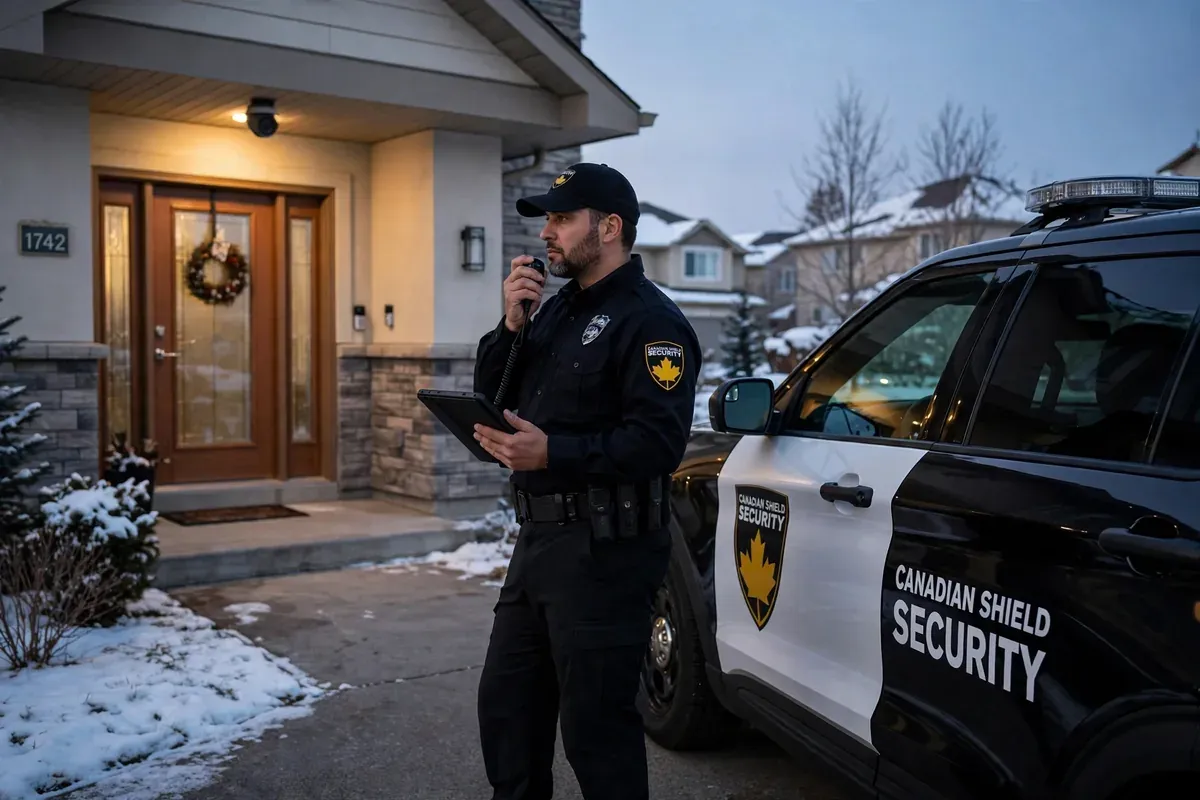
It is 11:20 on a November night in Windermere, T6W, and a parcel thief is working your street. Your doorbell camera catches a clear face shot -- or it would, if the lens were not fogged and the infrared not maxed out at six feet. A camera that helps is chosen before you buy it, not after. Canadian Shield Security installs cameras on Edmonton homes year-round; this guide covers what matters here: cold-rated hardware, placement, and Alberta privacy rules.
Most camera buying advice is written for mild climates and big-box kits. Edmonton homes face long dark winters, driving snow, and alleys that mature neighbourhoods share with strangers. This guide covers the three specs that matter, where to mount cameras on a typical home, what PIPA Alberta says about home surveillance, and when DIY stops being enough. Our security camera installation service is designed around these exact conditions.
For Edmonton homes, choose 2K or 4K cameras with infrared night vision and cold-rated hardware, mount them 2.4 to 3 metres high over entries, garage and back alley, store footage on an NVR or encrypted cloud, and aim cameras at your own property under PIPA Alberta rules. Pros are worth it for wired multi-camera installs.
Start With Your Goal, Not the Camera Box
Cameras serve three jobs, and each one changes what you buy. Deterrence needs visible cameras in obvious places. Evidence needs resolution high enough to identify a face or plate at the distance you care about. Monitoring needs reliable remote access for checking the house from work or the airport. Decide which job matters most for each camera position before you shop.
Package theft is the most common complaint we hear from homeowners in newer suburbs. A single well-placed doorbell camera with good two-way audio solves more of these cases than four blurry cameras mounted under the roofline. Pair it with the basics from our home break-in prevention guide -- solid locks, lit entries, trimmed sightlines -- and cameras become the layer that records what the other layers stop.
Edmonton Weather Is the Real Camera Test
January nights in Edmonton run long and bitter, and that is when most outdoor cameras earn their keep. Cheap cameras fail in three predictable ways here: housings that crack or fog when temperatures swing, infrared that washes out in blowing snow, and Wi-Fi that drops because the camera sits too far from the router in a cold garage. None of these show up in a showroom demo. Ask for the operating temperature range in writing, and look for IP66 or IP67 weatherproofing plus infrared night vision rated for the distances on your lot.
Snow and ice on the lens are a smaller but real problem. Mount cameras under an eave or a small hood where possible, angled slightly downward so meltwater runs off instead of pooling on the glass. In alleys behind Strathcona and T6E homes, where lanes are dark and garages sit close to the fence line, a camera with strong infrared and a motion-triggered floodlight covers what street lighting never reaches.
The Three Specs That Actually Matter
Marketing sheets list dozens of specs. Three decide whether your footage is useful: resolution, night vision, and storage. Everything else is a tiebreaker.
- Resolution: 2K (4MP) is the practical minimum for identifying faces at doorway distances; 4K (8MP) earns its price at longer distances like driveways and alleys.
- Night vision: true infrared (IR) with a stated range of at least 15 to 20 metres for a standard lot. Colour night vision helps on lit streets but still needs some ambient light.
- Storage: a wired NVR (network video recorder) keeps footage local and private; encrypted cloud storage is easier but check the monthly fee and retention window. Keep at least two to four weeks of footage for anything you might need after a police report is filed.
Wired PoE (power over ethernet) cameras beat wireless on reliability in Alberta homes: one cable carries power and data, there is no battery to change in February, and the signal does not die behind a stucco-and-steel garage. Wireless suits renters and single-camera fixes, but expect to mind batteries and Wi-Fi dead zones.
| Camera Type | Best For | Edmonton Note |
|---|---|---|
| Bullet | Driveways, alleys, long sightlines | Visible deterrent; needs a hood or eave against snow glare |
| Dome | Front doors, porches, garages | Vandal-resistant; tinted dome hides which way it points |
| Doorbell camera | Parcels, front-door visitors | Best single-camera fix; mind battery life in winter |
| PTZ | Large yards, commercial lots | Overkill for most homes; needs wired power and planning |
| Floodlight camera | Dark side yards, rear lanes | Motion light plus camera covers alleys no streetlight reaches |
Where to Put Cameras on a Typical Edmonton Home
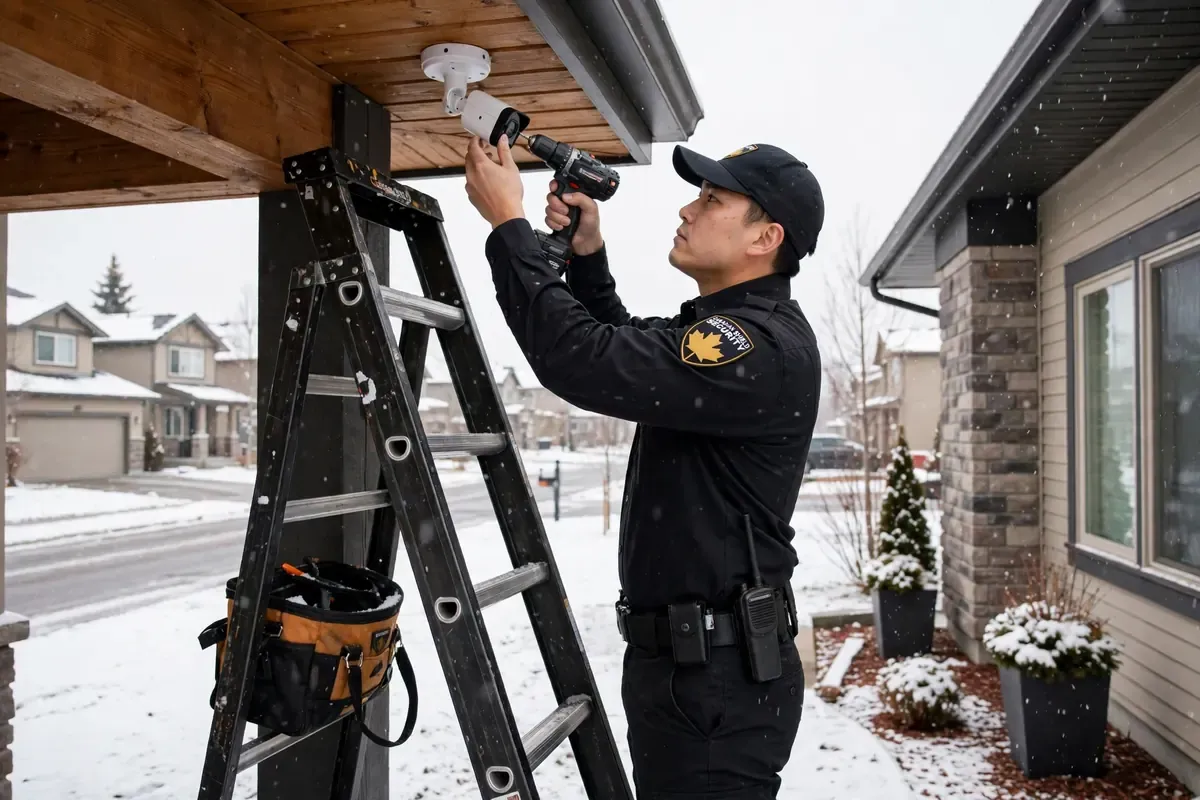
Four positions cover most single-family homes: the front door (faces and parcels), the driveway or garage (vehicles), the back door and yard (the entry burglars actually prefer), and the rear alley or side gate where fences create blind corners. Mount outdoor cameras 2.4 to 3 metres high -- high enough to deter tampering, low enough that faces read clearly. Tilted too high, every recording becomes a collection of hat brims.
Keep each camera to one clear field of view. A camera trying to watch both the front walk and the street catches neither well. Overlap coverage slightly at corners rather than leaving gaps, and check the view at night: headlights, porch lights and snow glare create hotspots that blind cheaper sensors. A short night walkthrough after installation is worth more than any spec sheet.
PIPA Alberta: The Privacy Rules for Home Cameras
Alberta's Personal Information Protection Act -- PIPA -- governs how private organizations collect, use and share personal information, and identifiable surveillance footage counts as personal information. For a homeowner, the practical rules are straightforward: aim your cameras at your own property and the public approaches to it, avoid pointing them at neighbours' windows, yards or other private spaces, and keep footage stored securely for security purposes only.
Alberta's privacy commissioner has confirmed that video surveillance for the security of a property is a reasonable purpose under PIPA, but has also ordered organizations to stop sharing footage more widely than security requires -- the same limit applies to a home system. Where the purpose is not obvious to visitors, a small sign noting video surveillance is the accepted practice. See the published PIPA video surveillance order from the Office of the Information and Privacy Commissioner of Alberta.
DIY Kits vs Professional Installation in Edmonton
A doorbell camera or a single wireless camera over the garage is a fair weekend project. Beyond that, professional installation pays for itself: running PoE cable through a finished basement, mounting on brick without cracking it, setting motion zones that ignore the neighbour's cat but catch the alley gate, and configuring retention so footage exists when you need it. Our technicians test every camera at night before sign-off, because that is when the system has to perform.
If you already have cameras but nobody watches the alerts, professional CCTV monitoring closes the loop: trained staff review motion events and dispatch a response instead of letting footage sit on a recorder until after something happens. For condos and apartments, the same logic applies at building scale -- see our condo package theft guide for how shared-entry cameras fit into a wider plan.
Choose a Licensed Installer
Security work in Alberta is regulated. The Security Services and Investigators Act (Alberta) requires businesses that provide security services for payment to hold a business licence issued by Alberta Justice, and individual guards to hold worker licences -- $100, valid two years, with approved training and an 80 percent provincial exam pass mark. Canadian Shield Security operates under SSIA business licence B001449 from our Edmonton office at 3536 33 Ave NW, Edmonton, AB T6L 5G6. When you compare installers, ask for the licence number the way you would ask an electrician for theirs.
Licensing is also your quality signal. A licensed company carries the insurance, training standards and complaint process the Act requires, which matters when someone is drilling into your home and configuring the system that guards it. Get the quote in writing, confirm who handles warranty call-backs, and make sure retention and privacy settings are configured for you -- not left on factory defaults.
Are security camera installers in Edmonton required to be licensed?
Yes. The Security Services and Investigators Act (Alberta) requires businesses that provide security services for payment to hold a business licence from Alberta Justice, and individual security workers to hold their own licences with approved training. Canadian Shield Security operates under SSIA business licence B001449. Always ask an installer for their licence number before hiring.
How much does security camera installation cost in Edmonton?
It depends on camera count, resolution, and wiring. As a rough guide from our installs, a basic two-camera residential setup starts in the hundreds of dollars, while larger multi-camera systems with an NVR run into the thousands. Wired PoE systems cost more up front than wireless kits but need less maintenance. We provide free written quotes after a site survey.
Does Canadian Shield Security install cameras outside Edmonton?
Yes. We install and service cameras across Edmonton and surrounding communities including St. Albert, Sherwood Park, Spruce Grove, Leduc, and Beaumont. If you manage a property in one of these areas, the same licensed technicians handle the survey, install, and night testing. Call 1 (800) 326-7879 for a free consultation about your location.
Can I point my security camera at my neighbour's yard in Edmonton?
You should not. Under PIPA Alberta, footage showing identifiable people is personal information, and collection must be for reasonable purposes only. Aim cameras at your own property and its public approaches, and keep neighbours' windows and private areas out of frame. A small surveillance notice sign is good practice where the purpose is not obvious.
Do security cameras work in minus 30 Edmonton winters?
Yes, if you buy winter-rated hardware. Choose cameras with an operating range down to minus 30 degrees or lower, IP66 or better weatherproofing, and housings that resist fogging when temperatures swing. Wired PoE cameras avoid the winter battery failures that plague wireless models. Professional installers test every camera at night before sign-off, which is when cold-weather problems show up.
Canadian Shield Security Editorial Team, Edmonton, Alberta
Canadian Shield Security serves Edmonton 24/7 with licensed installation and monitoring. Free consultation -- call 1 (800) 326-7879 or request a free consultation.
