
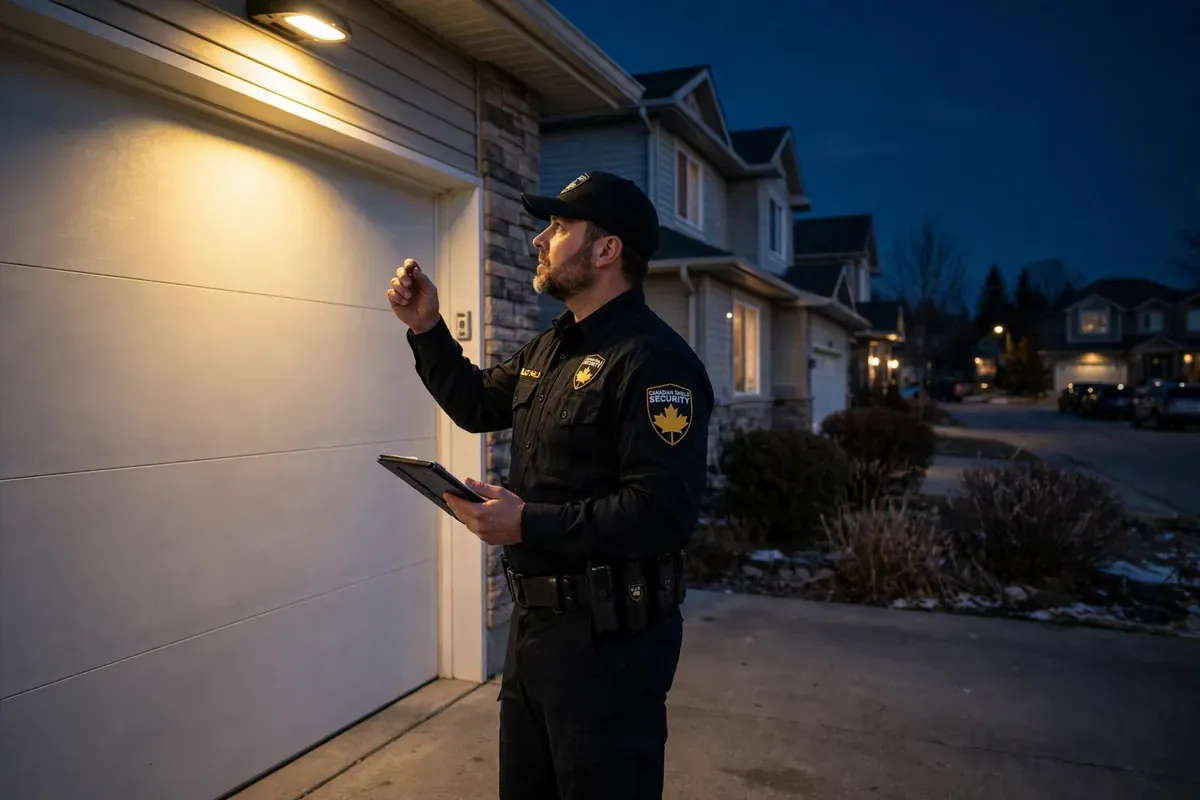
Between April 3 and May 9, 2025, Edmonton police logged 12 garage break-ins in the Westmount and 124 Street areas. The suspects came on bicycles through back alleys between 2 a.m. and 6 a.m., taking anything they could ride or carry. If your home has an alley-access garage -- in T6H, T6R, or the older west end -- this guide from Canadian Shield Security covers the fixes that stop the next series before it reaches your street.
Most home break-ins are crimes of opportunity, not planned heists. A door that flexes under a shove, a side gate left unlatched, a dark window over the garage -- each one is an invitation. Home break-in prevention Edmonton homeowners can rely on starts with small fixes, and the ten practical steps below run from the cheapest fixes to the most protective layers.
The numbers back up the urgency. EPS reported that Edmonton's property crime rate rose 10.1% in 2025, driven by shoplifting, mischief and theft from motor vehicles, while the total crime rate climbed 3.2%. Constable Carrie Bosse of the EPS West Division advised residents to add alarms on garage doors, use secure locks on side doors, and install motion-activated lighting or cameras -- the same three fixes that open this guide.
Home break-in prevention in Edmonton starts at the entry points: upgrade deadbolts and strike plates, alarm garage doors, and light alleys and side gates with motion sensors. Add cameras and alarm response next, then scheduled patrols for the last layer. Opportunistic thieves skip homes that look defended -- these ten steps make yours one of them.
Step 1: Start With the Door Hardware
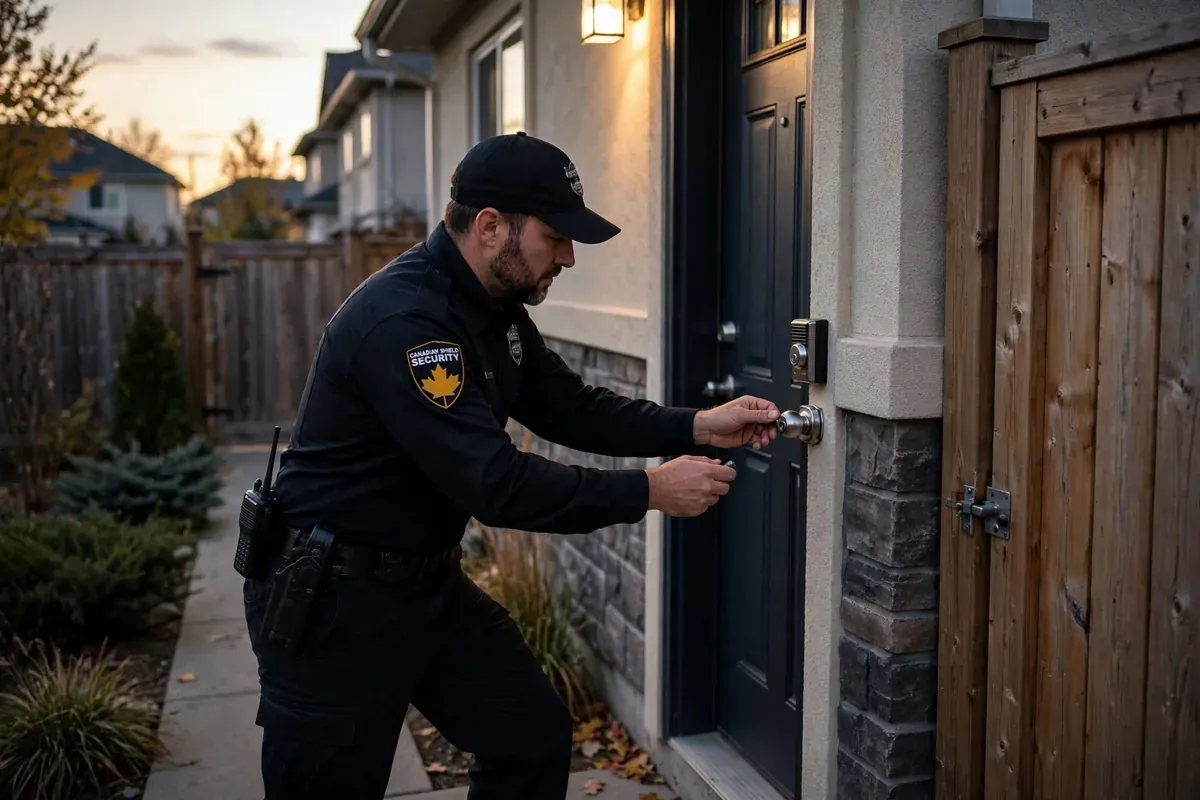
A surprising number of forced entries succeed because the lock is fine but the frame is not. A standard strike plate held by half-inch screws tears out of softwood with one kick. Swap it for a reinforced strike plate and drive 3-inch screws deep into the wall stud behind the jamb, so the frame -- not the trim -- takes the force. Use a deadbolt with at least a one-inch throw on every exterior door, including the door from the garage into the house. That one is the break-in route people forget, and it should lock like the front door.
Step 2: Treat Your Garage as a Second Front Door
The EPS spring series proved garages are the favourite target in west Edmonton, and for good reason: tools, bikes and vehicles sit behind a door most people never lock. Fit an alarm contact on the garage door so opening it after hours triggers the same response as a front-door breach. Lock the interior door from the garage into the house with a deadbolt, keep the remote opener out of parked cars, and point a camera at the alley side of the garage so anyone casing it is on record before the first attempt.
Step 3: Light Every Approach
Darkness is the burglar's uniform. Motion-activated floodlights over the garage, the side gate and the back door strip away the cover that makes a 3 a.m. attempt comfortable. Aim lights down at the approach rather than into neighbours' windows, and choose models with adjustable sensitivity so Edmonton's alley cats do not trigger them all night. This is crime prevention through environmental design in its simplest form -- the same approach our security audit walkthroughs start with, using natural surveillance to make your property the one thieves skip.
Step 4: Put Cameras Where They Verify, Not Just Record
A camera that only records is a witness; a camera tied to monitored CCTV is a deterrent. Mount cameras high enough to capture faces and licence plates, but the real difference is what happens when motion is detected: monitored systems can dispatch a guard or verify an alarm before police are called. Cover the garage door, the side gate and the front approach -- the three spots every Edmonton break-in report mentions first. Skip the dummy cameras; experienced thieves spot them in seconds, and a fake camera leaves you with no footage when it matters.
Step 5: Wire Alarm Response Into the Plan
Under the EPS Enhanced Calls program, an intrusion alarm needs verification before police are dispatched, so a siren at an empty house buys noise, not a response. Wire the alarm to a monitoring centre and alarm response cover: when the panel trips, a licensed guard arrives, checks the property, and gives police something to act on. Keep entry delays short -- a burglar who knows the code window is racing your responder, and a short delay keeps that race fair.
Step 6: Harden the Windows
Ground-floor and basement windows are the second way in after doors. Pin locks stop a sliding window from lifting off its track, and security film on the glass keeps a smashed pane in one piece -- noisy and slow, which is exactly what a thief hates. Basement hopper windows deserve the same treatment, and never leave a ladder against the house after yard work. For a full walkthrough of door and window weak points, see our home security guide.
Step 7: Cut the Hiding Spots
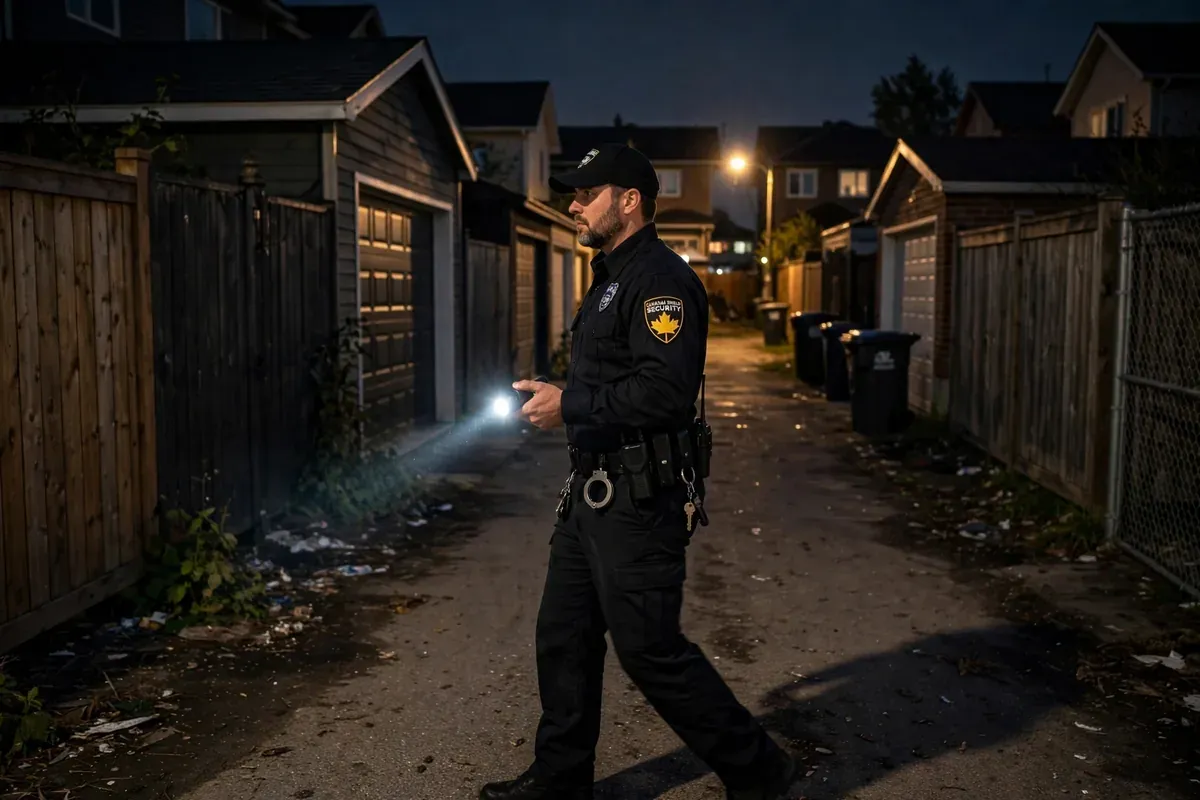
Overgrown shrubs under a front window are a hiding spot with leaves. Trim bushes below sill height and keep sightlines open from the street to the front door -- neighbours and passing patrols are your best free surveillance. Lock the side gate every night and repair sagging alley fencing so the property reads as maintained, not neglected. Thieves case streets, not houses; a home that looks watched from the street rarely makes the shortlist.
Step 8: Look Lived-In When You Are Away
Most residential break-ins happen in daylight while owners are at work, so the goal is a home that looks occupied. Put two or three lamps on timers with staggered schedules, hold your mail on longer trips, and in winter keep the driveway and walk shovelled -- untouched snow is Edmonton's most honest tell that nobody is home. Ask a neighbour to move your bins on collection day, and park a vehicle in the driveway rather than the garage when you travel.
Step 9: Record Serial Numbers Before You Need Them
Constable Bosse's other piece of advice is the cheapest on this list: record serial numbers for bikes, tools, electronics and anything else that walks out of a garage. Photograph each item beside its receipt or serial plate and store the list off-site, in cloud storage or with a relative. If police recover stolen property, a serial number is often the only proof that turns a seizure into your item coming home.
Step 10: Add a Scheduled Patrol as the Last Layer
Every step so far raises the cost of choosing your home. The last layer is a human one: scheduled residential patrols that check your property through the night, verify alarms, and write reports you can actually read. Patrols break the pattern that makes a house a repeat target -- after the first attempt fails, thieves move on. Book a free consultation at 1 (800) 326-7879 to map patrol coverage to your street, whether you are in Westmount, Windermere, or anywhere across the metro.
| Prevention measure | Effort / cost | What it stops |
|---|---|---|
| Reinforced strike plates + 3-inch screws | Weekend project, hardware-store parts | Kick-in attacks on exterior doors |
| Alarm contact on the garage door | Professional install | Overnight garage entries |
| Motion lighting on alleys and gates | One afternoon | Night-time approaches |
| Monitored cameras | Professional install | Unverified break-in attempts |
| Scheduled patrols | Monthly service | Repeat targeting, alarm verification |
Is Canadian Shield Security licensed for home security work in Alberta?
Yes. Canadian Shield Security operates under SSIA business licence B001449, issued under the Security Services and Investigators Act (Alberta). Every guard assigned to your home also holds an individual provincial licence, which means background checks and training are enforced by law, not just company policy. When you compare quotes, ask every company for its licence number first.
How much does home break-in prevention cost in Edmonton?
The first steps cost almost nothing: longer screws, window pins and a locked side gate run to a modest hardware bill. Quality deadbolts and motion lighting sit in the mid range, while monitored cameras and scheduled patrols are quoted per property. Our residential security cost guide breaks down typical Edmonton ranges, and a free consultation prices your home exactly.
Does Canadian Shield Security cover my Edmonton neighbourhood?
Yes. Canadian Shield Security runs residential patrols and alarm response across Edmonton, including the west-end alleys hit by the 2025 garage break-in series, plus Westmount, Glenora and Windermere. Coverage extends to St. Albert, Sherwood Park, Leduc, Beaumont, Nisku, Acheson, Stony Plain and Spruce Grove, dispatched 24/7 from 3536 33 Ave NW, Edmonton.
What should I do first after a break-in at my Edmonton home?
Leave the property and call 911 if the intruder could still be inside -- never go back in to check. Once police clear the scene, photograph damage and list missing items with serial numbers for your insurer. Then book a security audit: repeat break-ins reuse the same entry point, so fixing the failed lock or dark approach matters most.
Are video doorbells enough to prevent break-ins?
Not on their own. Doorbells record the front step, but EPS data shows thieves favour back alleys and garages a doorbell never sees. Pair the doorbell with motion lighting, a reinforced strike plate, and alarm response so someone acts when the chime is ignored. A camera is evidence; a camera plus a responder is prevention.
Canadian Shield Security Editorial Team, Edmonton, Alberta
Canadian Shield Security serves Edmonton 24/7. Free consultation -- no hidden fees. Call 1 (800) 326-7879 or request a free consultation.
