
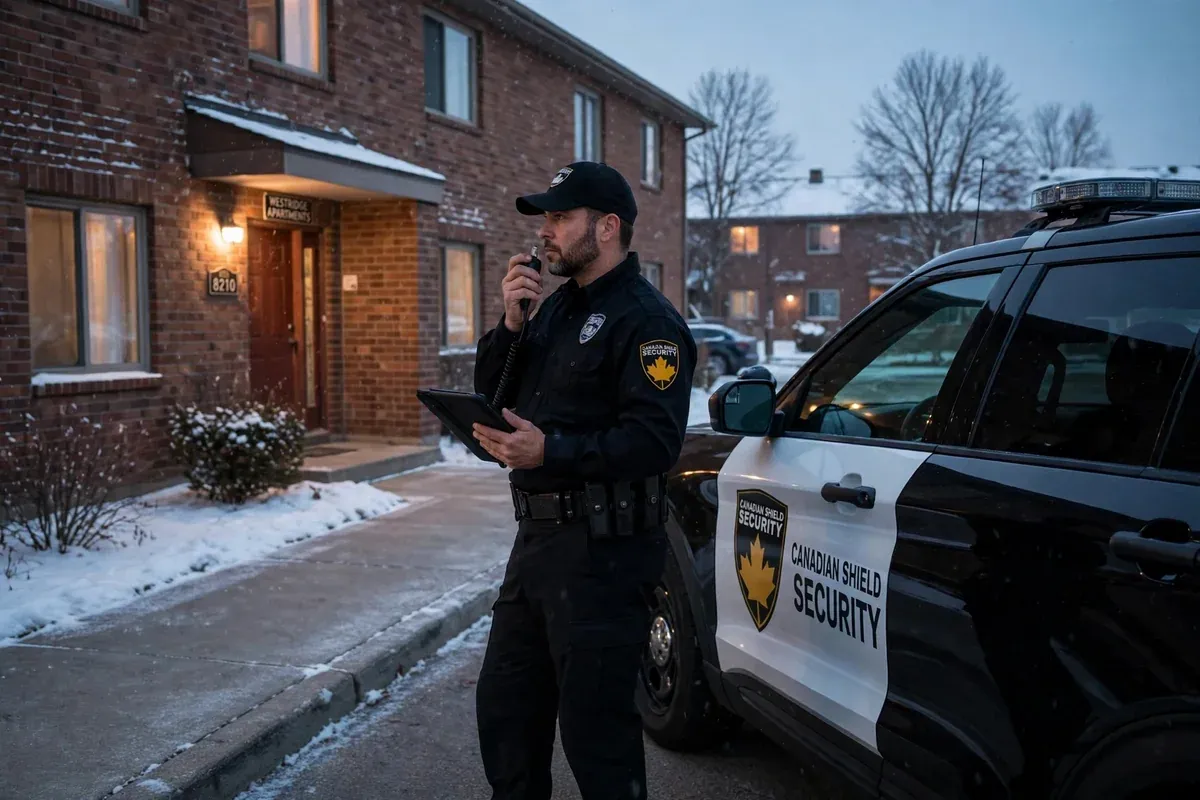
It is 2:40 a.m. on a February night in Strathcona, T6E, and your phone lights up. Your tenant is whispering: someone has kicked at the side door of the duplex twice, and the lock held -- barely. Whose job was that door? What does Alberta law actually require of you as a landlord? And what do you do if it happens again next week? Canadian Shield Security gets these calls from Edmonton landlords all winter, and the answers are more specific than most expect.
Alberta puts real duties on landlords when it comes to security. The Residential Tenancies Act covers locks and keys in plain terms, and the Minimum Housing and Health Standards require exterior doors and windows that lock securely. This guide walks through what the law says, the key-control rules most landlords get wrong, common areas, the high-risk turnover window between tenancies, and when licensed guards make sense. Our residential security services are built around these situations.
Landlords must keep rental units lockable, safe and in good repair under Alberta's Minimum Housing and Health Standards, and the Residential Tenancies Act says neither party may be locked out -- keys must be exchanged immediately when locks change. Beyond that, control keys between tenancies, light and secure common areas, watch vacant units, and hire licensed guards for repeat incidents.
What Alberta Law Actually Requires of Landlords
The Residential Tenancies Act sets the floor. Section 16(c) requires landlords to make sure rental premises meet the minimum standards set under the Public Health Act, and those Minimum Housing and Health Standards state that exterior windows and doors must be capable of being locked. Alberta Health Services, which administers the standards, puts it plainly on its Renting in Alberta page: rental housing must have doors and windows that can be locked securely, and the landlord must keep the property safe and in good repair at all times.
The Act's locks rules are stricter than many landlords realize. Neither side can be locked out. If you change locks, the tenant gets the new key right away; a tenant who wants to change locks needs your permission first and must hand you a new key immediately -- the only exception is inside-only chain locks. The Alberta government spells out these lock rules on its tenancy page, and breaking them can draw an inspector visit or a dispute at the Residential Tenancy Dispute Resolution Service.
Locks, Doors and Windows: The Non-Negotiables
Start with the hardware, because most compliance lives here. Every exterior door needs a working lock -- deadbolts on entry doors, secure latches on windows -- and do not forget the spots people skip: basement windows, sliding patio doors and the man-door between an attached garage and the house. Ground-floor openings deserve priority; they are the easiest targets and the first things an inspector or insurer looks at.
Between tenancies, re-key or replace the locks -- no exceptions. You cannot know how many copies of the old key are floating around: former tenants, their guests, contractors, a neighbour who fed the cat. Rekeying resets your key control from a known starting point and costs far less than a break-in by someone who still had a key. Keep the receipts as proof you met your duty.
Keys, Fobs and the Rules Landlords Get Wrong
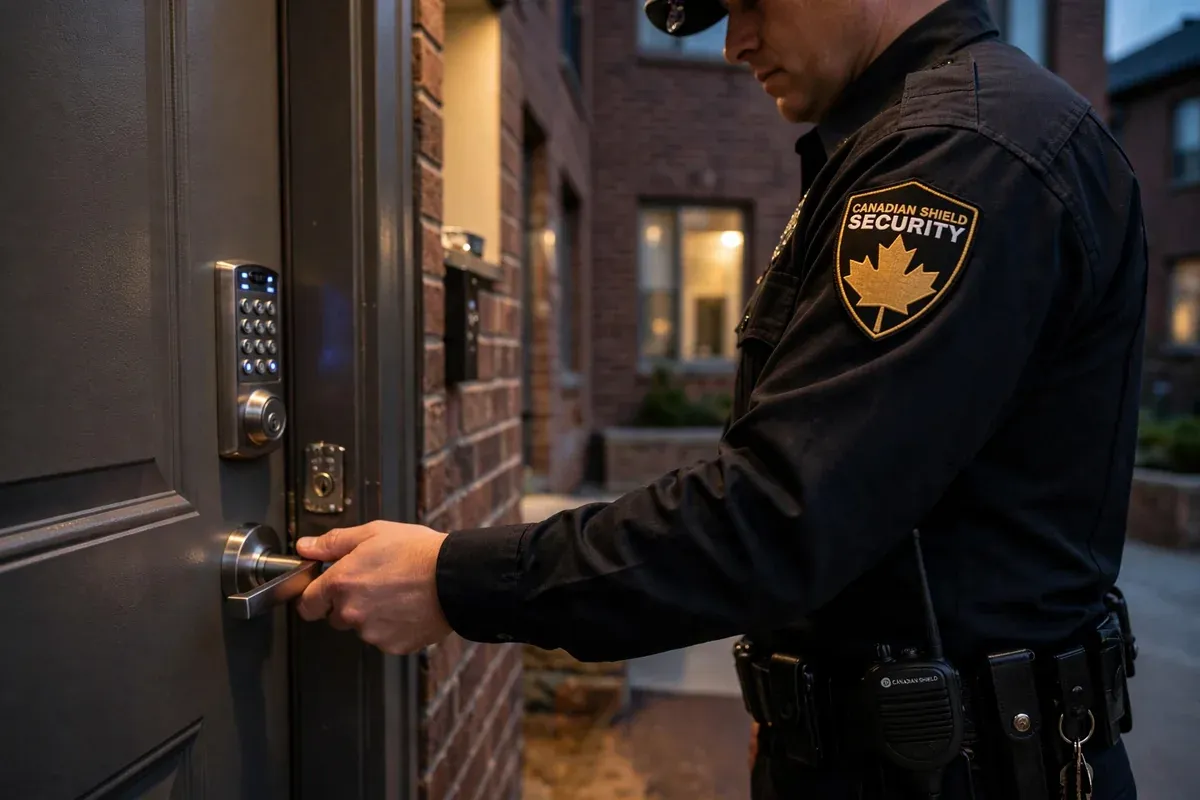
Key control is where landlords most often trip over the Act. If you change or add locks, the tenant gets the new key immediately, and if the tenant changes locks with your permission, you get a copy immediately. Keep a written key log for every unit -- which keys, to whom, on what date -- and collect every key, fob and garage remote on move-out day.
For multi-unit buildings, consider keypad or fob entry on common doors: no copied keys, instant deactivation when a tenant leaves, and an audit trail of entries. One more surprise: you cannot change the locks to win a dispute. Changing locks to push out a tenant -- even one behind on rent -- is not allowed. Lockouts create liability; the notice process protects you. Our condo security services handle buildings that have made the fob switch.
The table below turns these duties into a simple upkeep schedule you can hand to a property manager.
| Security Duty | Do It When | Why It Matters |
|---|---|---|
| Exterior doors and windows lockable | Before each tenancy + quarterly | Required by Alberta's housing standards |
| Re-key between tenants | Every turnover | Old keys stay in circulation |
| Key log + immediate key exchange | Ongoing | The RTA requires new keys right away |
| Common-area lighting and entry doors | Twice-yearly night audit | Deters loitering and trespass |
| Vacancy watch between tenants | Any gap over two weeks | Empty units attract break-ins |
Common Areas, Parking and the Building Envelope
Your duty does not stop at the unit door. Hallways, laundry rooms, storage lockers and parking lots are yours too. Good lighting is the cheapest upgrade you will ever buy: well-lit entries, stalls and walkways discourage loitering and make residents feel safe walking to their cars on a January night in Mill Woods, T6K, or downtown, T5J.
Walk the property the way a stranger would. Do the intercoms work, or has the front door been propped open for a month? Are mailboxes intact, the parkade gate closing fully, stairwells lit on every landing? Cover entries and blind parking corners with cameras and post clear signage. A camera records, it does not respond -- when common areas have repeat incidents, the step up is a scheduled patrol, which our mobile patrol service covers in detail.
The Turnover Window: When Rentals Are Most Vulnerable
The riskiest moment in a rental's life is the week between tenants: the unit sits empty, contractors come and go with keys, and nobody notices a broken window or a door left ajar. Vacant properties attract squatters, theft and vandalism -- and insurers know it, which is why many policies tighten conditions on vacant properties. Treat every turnover like a security project: re-key before the new tenant arrives, keep the unit looking occupied, change shared codes on move-out day, and arrange patrol checks if the gap stretches past two weeks.
When Hiring Licensed Security Makes Sense
Most landlord duties are maintenance and management, but some situations call for professional guards: a multi-unit building with repeat break-ins, a property where tenants feel unsafe, or a large vacant property awaiting renovation. In Alberta, every guard on duty must hold a security service worker licence under the Security Services and Investigators Act (Alberta), issued by Alberta Justice -- applicants must be 18 or older, have no criminal record, complete an approved training course and score at least 80% on the provincial exam. The $100 licence lasts two years; ask to see it before you hire.
What do guards actually do for a rental property? Patrol grounds and parkade on an irregular schedule, check that common doors and gates are secured, challenge strangers politely, document every round with time-stamped notes, and escalate to the Edmonton Police Service when something is wrong. The police non-emergency line is 780-423-4567, or 911 for crimes in progress. A guard's real value is the log: incident patterns that tell you where to spend next. Our home break-in prevention guide covers the physical fixes guards usually recommend first.
A Simple Landlord Security Routine
- Quarterly walkthrough: test every exterior lock, latch and deadbolt; check ground-floor windows; confirm intercoms and entry fobs work.
- Lighting audit twice a year: walk the property after dark and replace dead bulbs; add fixtures where shadows pool around entries.
- Key control at every turnover: re-key before the new tenant arrives, update the key log, and collect all keys, fobs and remotes on move-out day.
- Common-area check monthly: hallways, laundry rooms, storage lockers, mail room and parkade gate -- secure, lit and clean.
- Vacancy plan ready: timer lights, code changes on turnover day, and patrol checks if the unit sits empty more than two weeks.
- Paper trail always: keep receipts and dated notes of every inspection -- your evidence of meeting the duty.
Most of this is habit, not budget: walk the property, fix what is broken, control the keys and write it down. People renew leases in buildings where they feel safe.
Are security guards in Edmonton required to be licensed?
Yes. Under the Security Services and Investigators Act (Alberta), every security guard must hold a security service worker licence issued by Alberta Justice. Applicants must be 18 or older, have no criminal record, complete an approved training course and score at least 80% on the provincial exam. The $100 licence lasts two years, so ask to see it before hiring.
How much does rental property security cost in Edmonton?
Basic compliance costs little: deadbolts, window locks and re-keying are inexpensive maintenance items. Fob systems and cameras cost more up front but end the re-keying cycle and provide evidence. Licensed guard patrols are priced by property size and visit frequency. A free site review gives you an exact number for your building.
Does Canadian Shield Security cover areas outside Edmonton, like St. Albert or Beaumont?
Yes. We serve Edmonton and the surrounding communities, including St. Albert, Sherwood Park, Spruce Grove, Leduc, Beaumont, Nisku and Acheson. Patrol routes are planned around the properties we serve, so landlords with buildings in neighbouring communities can usually be covered on an existing route. A quick call confirms availability for your property.
Can my tenant change the locks without my permission?
Generally no. Under the Residential Tenancies Act, a tenant may add or change locks only with your permission, and must give you a new key as soon as the change is made. The exception is inside-only locks, such as chain locks, which need no permission -- but they cannot block a landlord who has given proper entry notice.
What should I do if my rental property is vacant between tenants?
Keep it looking occupied with timer lights, shovelled walks and emptied mail, change all codes when the last tenant leaves, and re-key before the new arrival. If the vacancy stretches past two weeks, arrange regular drive-by or foot patrol checks. Tell your insurer too -- many policies have special conditions for vacant properties.
Canadian Shield Security Editorial Team, Edmonton, Alberta
Canadian Shield Security serves Edmonton 24/7. Free consultation -- no hidden fees. Call 1 (800) 326-7879 or request a free consultation.
