
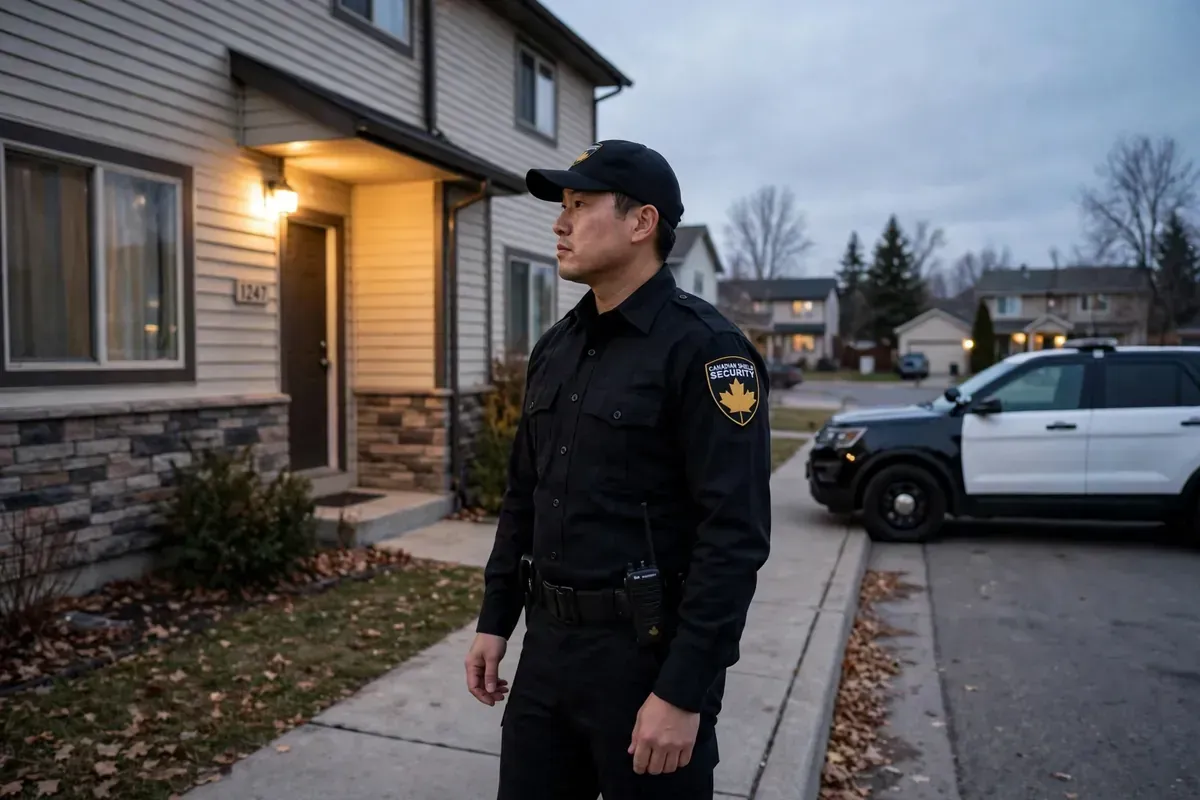
It is 6:10 on a January morning in Toronto, and the phone rings. Your tenant in Mill Woods, T6K, has moved out, and the property manager just found a back window smashed and the furnace room door standing open. You are 3,400 kilometres away, the house is empty, and the next cold snap is two nights off. That gap between you and your Edmonton rental is exactly what long-distance property security is built to close, and it is why landlords across the country call Canadian Shield Security.
This guide is for landlords who own rental property in Edmonton but live somewhere else: in Toronto, Vancouver, Calgary, or overseas. It explains what long-distance property security covers, how patrols and alarm response work when you cannot be there, what it costs, and the licensing check to make before you hire anyone. Our residential security service is the starting point for most out-of-town owners, and it pairs well with a patrol that visits on a set schedule.
Long-distance property security in Edmonton means a licensed local team watches your rental when you cannot. Patrols check doors, windows, and heat on a set schedule, alarm response sends a guard when a sensor trips, and you get a written report after every visit. It keeps a rental safe, occupied or empty, all year.
Why Distance Makes an Edmonton Rental Harder to Protect
An empty house shows it. Mail piles up, the walk stays unshovelled, and a dark window at 6 p.m. tells anyone watching that nobody is home. In Edmonton, winter adds a second risk: a furnace that stops on a minus-30 night can leave burst pipes and a flooded basement before anyone notices. A tenant who leaves without notice, a break-in found days later, or a small leak that runs for a week can each turn into a repair bill far bigger than the problem that started it.
Alberta law still holds you to the same duties as a landlord who lives next door. Under the Residential Tenancies Act, you must keep the premises safe and habitable, meeting the Minimum Housing and Health Standards under the Public Health Act. You must give a tenant at least 24 hours of written notice before entering, between 8 a.m. and 8 p.m., except in an emergency, and you must complete move-in and move-out inspection reports with the tenant. If locks are changed during a tenancy, the tenant must get a key. A local team that can be at the door on schedule is how a landlord in another city meets those duties without booking a flight.
What Long-Distance Property Security Covers
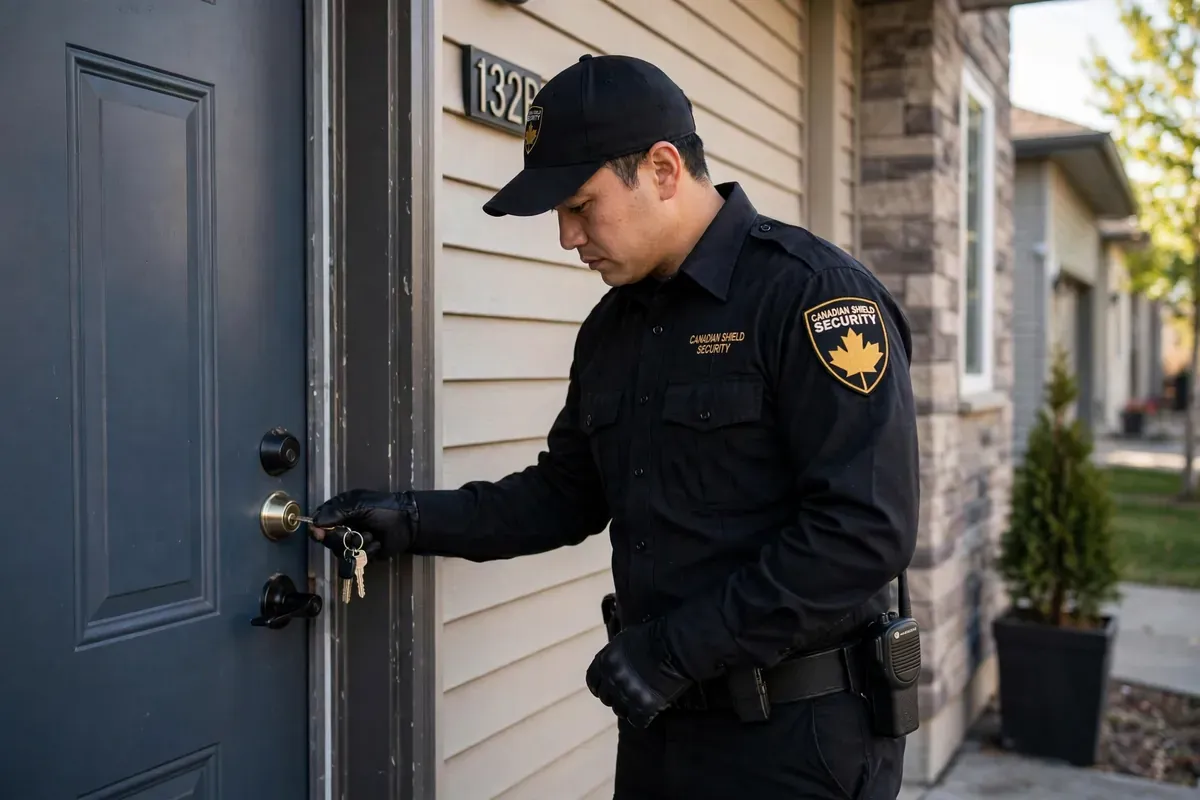
The core of the service is a set patrol: a licensed guard visits your property at set times, checks every door and window, looks for signs of forced entry or damage, and confirms the heat is on and the pipes are safe. Each visit ends with a written report and photos, sent to you the same day, so you see the property even when you cannot be there. Our mobile patrol runs these rounds across Edmonton, and a guard can also collect mail, check that the walk is clear, and flag anything that needs a tradesperson.
Alarm response is the second half. When a sensor trips at 2 a.m., a guard goes to the property, checks the building, and stays until police arrive if a break-in is confirmed. For an empty rental, that response is the difference between a broken window found at dawn and a break-in found a week later. Key holding ties it together: we hold a set of keys under a signed agreement, so a guard can enter legally when an alarm trips or a check is due, and no key is left under a mat or with a stranger. Our alarm response team works with the alarm system you already have.
Patrols, Alarm Response, or Cameras: Picking the Right Cover
The right mix depends on whether the property is tenanted or empty, how long it will sit, and what has already gone wrong there. An occupied duplex with a good tenant usually needs a weekly check and alarm response. An empty house in January needs more. Here is how the options compare.
| Cover | Best For | What You Get | Typical Use |
|---|---|---|---|
| Scheduled patrol | Empty or tenanted rentals | Door, window and heat checks plus photos | Weekly or nightly visits |
| Alarm response | Any rental with an alarm | Guard on site when a sensor trips | 24/7, as alarms sound |
| Key holding + checks | Owners in another city | Signed key custody and legal entry | Vacant homes and turnovers |
| Camera + remote watch | High-risk or repeat targets | Cameras checked after alerts | Empty homes, long gaps |
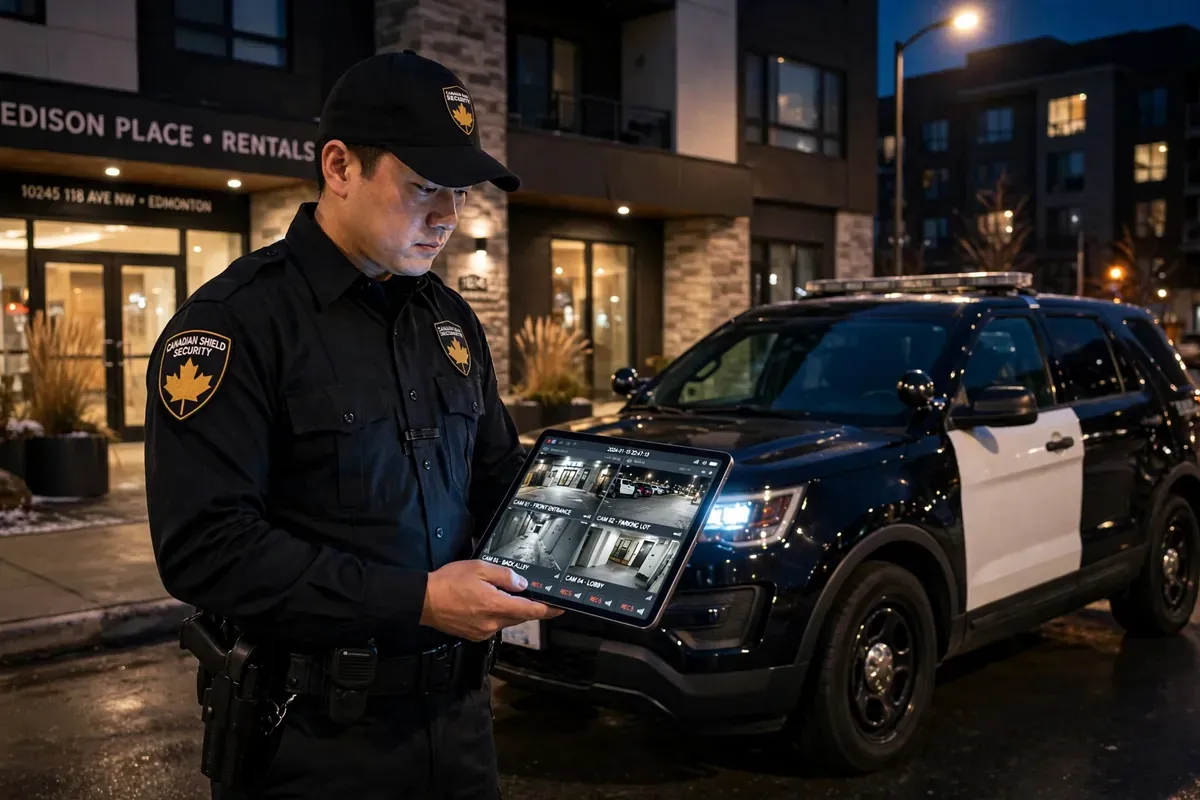
Most out-of-town landlords start with a weekly patrol and alarm response, then add visits during a vacancy or a turnover. If the patrol log keeps naming the same broken fence panel or dark side gate, fix that spot first: a camera there beats another patrol round. A patrol can be shaped to one route and one set of hours, so you pay only for the cover you need.
What Long-Distance Property Security Costs in Edmonton
Cost comes down to how often a guard visits, how long the property sits empty, and whether alarm response is included. A weekly check of one house costs far less than nightly visits to a portfolio of four, and a vacant home in winter usually needs more visits than a tenanted one. The number that matters is the cost per property per month, and any honest quote follows a free site visit where the provider walks the property and puts the route and the price in writing.
We offer free consultations across Edmonton. Call 1 (800) 326-7879 or request a free consultation online, and we will walk the property, take photos, and send you a written quote to compare with other providers.
SSIA Licensing: The Check Every Out-of-Town Landlord Must Make
Every security guard in Alberta must hold a valid licence under the Security Services and Investigators Act (Alberta). To get one, a guard must be over 18, eligible to work in Canada, and fluent in English, with no criminal record and no open investigation. Each guard completes an approved training course and scores at least 80 percent on the provincial final exam. The licence costs $100 and lasts two years. The company must also hold a valid SSIA business licence -- ours is B001449. Check the official licensing requirements before you sign with any provider.
This check matters more when you hire from another city, because you cannot walk into the office and size up the team. A licensed guard has passed a background check and provincial training, and a licensed company carries the standards and complaint process the Act requires. Before signing, ask for the business licence number and the licence numbers of the guards who will visit your property.
Setting It Up From Another City
You do not need to fly to Edmonton to start. The setup takes a few calls and one signed agreement, and the first patrol can usually begin within days.
- Book a free consultation and describe each property: address, tenanted or empty, alarm system, and any past problems.
- We visit the property, walk the doors, windows, and side gates, and send you photos and a written quote.
- Sign the service agreement, including key custody terms, patrol times, and how reports reach you.
- Hand over keys by courier or through your property manager, and we log them under a signed receipt.
- Patrols begin on the agreed schedule, and every visit ends with a written report and photos in your inbox.
- Review the first month of reports with us, then adjust the frequency up or down.
A rental you cannot see is a rental you cannot protect on your own. A licensed local team closes that gap: regular eyes on the property, a guard at the door when an alarm trips, and a written record you can read from anywhere. Start with a free consultation and a walk-through of the property. Our residential security team can scope a patrol for a single house or a small portfolio, and our rental property security guide explains how to protect a tenanted home in the city.
Is Canadian Shield Security licensed under Alberta's SSIA?
Yes. Canadian Shield Security holds a valid business licence under the Security Services and Investigators Act (Alberta), licence number B001449. Every guard we send to your property holds an individual licence too, after approved training and a provincial exam passed at 80 percent or higher. Ask us for the numbers before you sign, and check them with Alberta Justice.
How much does long-distance property security cost in Edmonton?
It depends on how often a guard visits and whether alarm response is included. A weekly check of one house costs far less than nightly visits to several properties, and a vacant home in winter usually needs more visits. Ask for a quote per property per month after a site visit, so you can compare providers on the same basis.
Which Edmonton areas do you cover for landlord patrols?
We patrol across Edmonton, including Mill Woods, Terwillegar, Windermere, Clareview, and the downtown core, plus St. Albert, Sherwood Park, and Spruce Grove. Patrol routes run day and night, seven days a week. If your rental sits outside our usual routes, ask us: we add properties to a route when the schedule allows.
Can a security company hold keys and check my vacant Edmonton rental?
Yes, under a signed key custody agreement. We hold a set of keys, log them under receipt, and use them only for scheduled checks or alarm response, with every entry noted in your report. Alberta law requires 24 hours of written notice before entering a tenanted home, so key holding is mainly used for vacant properties and emergencies.
What happens if an alarm goes off at my Edmonton rental while I am away?
Our alarm response team sends a licensed guard to the property, checks the doors and windows, and stays until police arrive if a break-in is confirmed. You get a call and a report the same night, with photos of what was found. If the property needs a locksmith or a board-up, we can arrange it and send you the invoice.
Canadian Shield Security Editorial Team, Edmonton, Alberta
Canadian Shield Security serves Edmonton landlords 24/7 with licensed patrols, alarm response, and key holding. Free consultation -- call 1 (800) 326-7879 or request a free consultation.
