
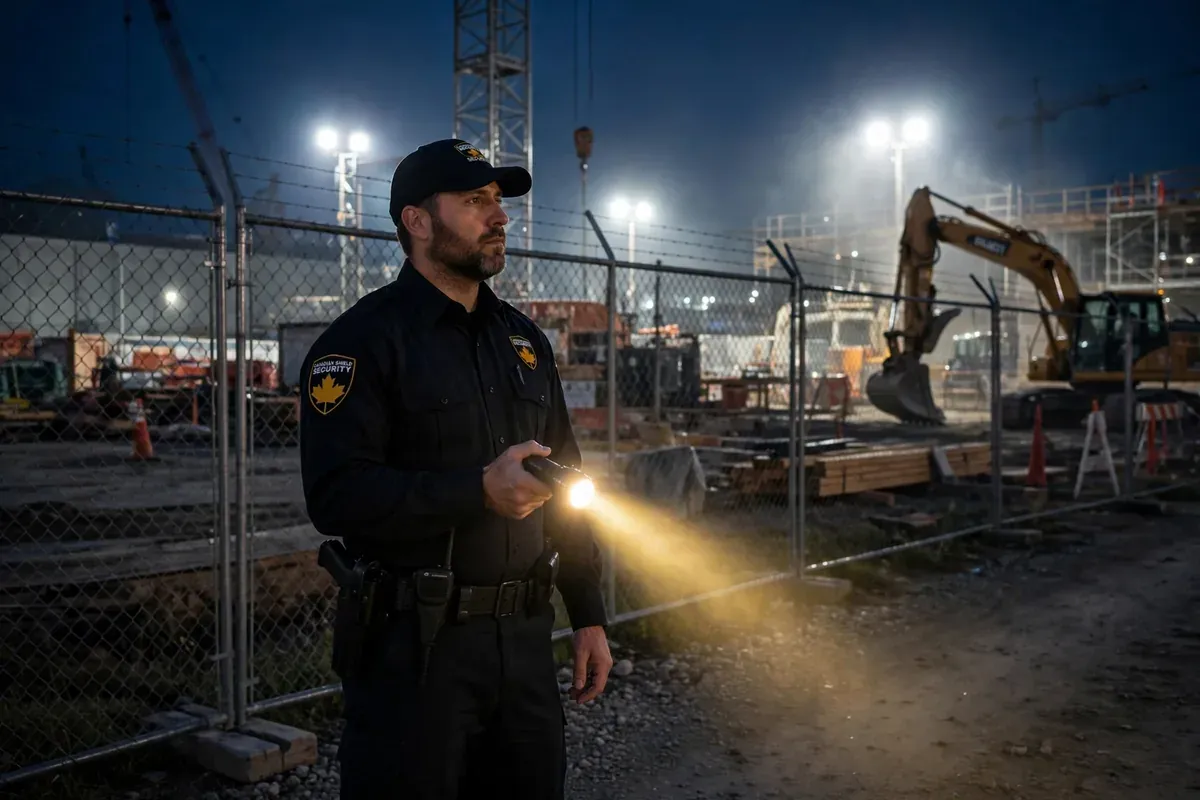
A business owner in South Edmonton (T6H) assumed his "24/7 monitored" alarm system meant a guard was watching his property in person every night. When a break-in happened at 2 a.m., he learned the plan only covered alarm response after the alarm triggered, not a stationed guard walking the property beforehand. He added scheduled patrol the same week and has not had an incident since.
That gap between what a business owner assumes is covered and what a contract actually includes is one of the most common and most costly misunderstandings in commercial security. Marketing language like "24/7 protection" and "always watching" rarely spells out what actually happens, and what does not happen, during a real incident.
This guide breaks down exactly what a typical after-hours security plan covers, what it usually leaves out, and how to build coverage that genuinely matches what you assumed you were already paying for.
|
FEATURED SNIPPET -- DIRECT ANSWER After-hours security typically covers scheduled or alarm-triggered patrol checks, a licensed guard's response to an alert, and incident documentation. It does not typically include a guard stationed inside your building around the clock, repairs to damaged locks or alarms, or police authority. Confirm exactly what your plan includes before you need it. |
After-Hours Security Means Different Things to Different Providers
The phrase "after-hours security" can cover everything from a camera feed being watched remotely, to a guard driving past your property twice a night, to a full-time officer stationed inside your building until sunrise. These are not interchangeable, even though marketing language often treats them that way.
This matters because the gap only becomes visible during an actual incident, exactly when it is too late to add coverage you assumed you already had. Understanding scope in advance avoids that gap entirely.
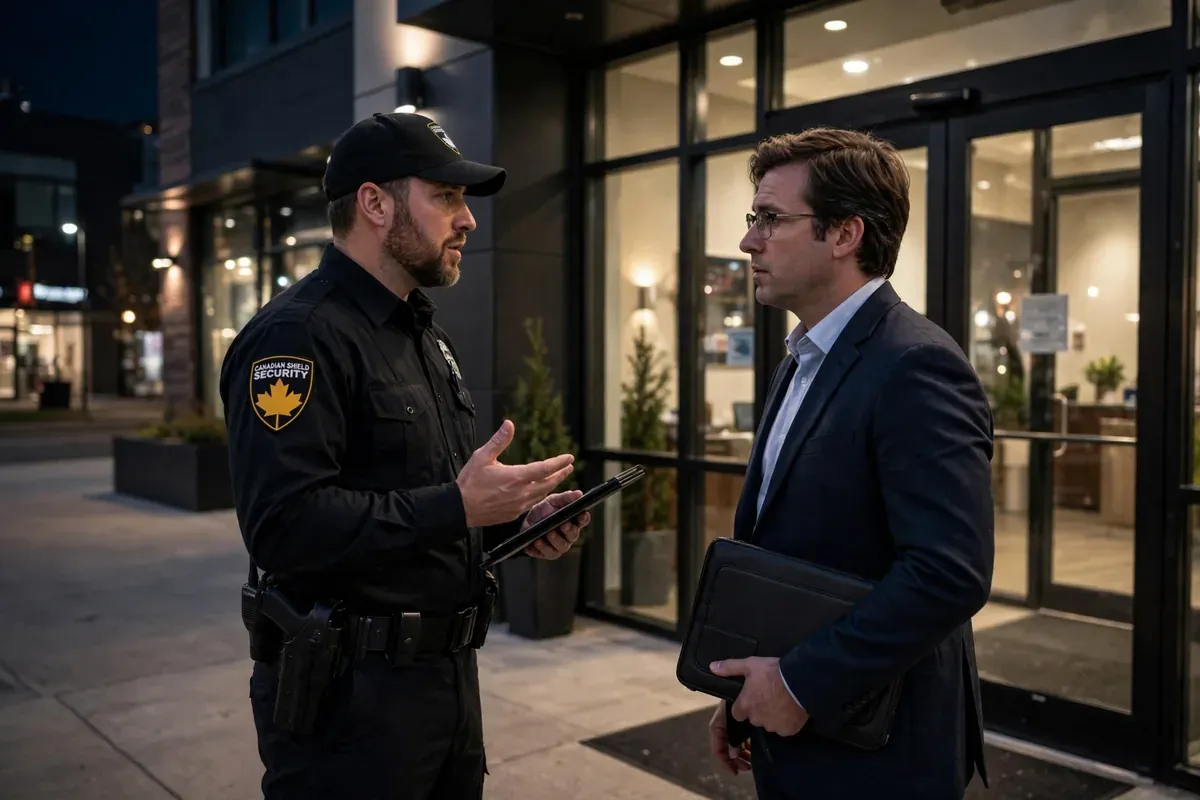
Every Edmonton provider structures this slightly differently, which is why the specific plan you sign matters more than the general phrase used to market it.
Reading a contract's scope of coverage section before an incident, rather than during one, is the single most useful five minutes a business owner can spend on after-hours security. It costs nothing and it is the only way to know for certain what you are actually paying for.
What a Typical After-Hours Security Plan Actually Covers
A standard after-hours plan usually includes a scheduled or alarm-triggered patrol check, response to a triggered alarm, exterior perimeter inspection, and a written incident report. Every officer performing this work holds a valid licence under the Security Services and Investigators Act (Alberta), which you can confirm through alberta.ca's security services page, regardless of what hour the shift takes place.
GPS dispatch typically routes the closest available officer to your property once an alarm triggers or a scheduled check comes due, rather than waiting for a fixed shift assignment. This is included in most mobile patrol contracts as standard, not an add-on.
Incident documentation is almost always included too. A guard checking your property after an alarm will typically log the time, what they observed, and any follow-up action taken, which becomes useful for both police reports and insurance claims.
|
AMBER -- WINTER FACTOR Edmonton winters affect this coverage in a real way. When temperatures drop toward -40C, patrol frequency and driving time both shift, and a provider worth using will tell you this upfront rather than let you discover it during a January incident. |
Most standard plans also include a basic keyholder callback if something requires your input, such as confirming whether a triggered door was expected or scheduling a repair the next business day. This is a small detail, but one that surprises owners who assumed they would never be contacted at all.
Post orders, the specific checklist an officer follows on each visit, are also typically included and worth asking to see. A vague instruction to 'check the property' produces far less consistent coverage than a documented list of exact doors, gates, and equipment pads to inspect every time.
What After-Hours Security Does Not Cover
A standard plan almost never includes a guard permanently stationed inside your building unless you specifically pay for on-site coverage. Mobile patrol and alarm response are reactive and scheduled, not a continuous physical presence.
Repairs are excluded too. A guard can document a broken lock, shattered window, or damaged alarm panel, but fixing it is not part of a security contract. That falls to your locksmith, glazier, or alarm technician.
|
AMBER -- TRUST / LIMITATION Police authority is the most important exclusion of all. SSIA-licensed guards observe, document, and secure a scene, but they do not replace Edmonton Police Service for an active crime, cannot make an arrest the way a sworn officer can, and will not pursue an escaped intruder beyond securing the scene. |
Guaranteed prevention is not included either, and any provider promising it is overselling. Patrol, cameras, and lighting all reduce risk meaningfully, but no combination of measures eliminates the possibility of an incident entirely.
Response time guarantees also deserve a closer look. A provider promising arrival within a fixed window is describing dispatch speed, not necessarily what the officer does once they arrive, which can vary considerably between a basic perimeter check and a full building walkthrough.
Ask specifically what a guard does upon arrival for any incident type you care about, rather than accepting a general reassurance. The answer to that one question usually reveals more about actual scope than an entire marketing page.
After-Hours Coverage Options and Cost in Edmonton
Cost depends entirely on which type of coverage your property needs. The table below reflects typical Edmonton figures for each option.
None of these figures include equipment costs, such as installing new cameras or upgrading an alarm panel, which are typically quoted separately from the ongoing patrol or monitoring fee itself.
After-Hours Security Coverage and Cost in Edmonton
|
Coverage Type |
What Is Included |
Typical Cost |
|
Alarm Response (reactive) |
Guard dispatched only when alarm triggers |
$28-$45 per hour, per incident |
|
Scheduled Mobile Patrol |
Regular drive-by or walk-through checks |
$28-$45 per hour |
|
On-Site Guard (stationed) |
Continuous physical presence overnight |
$32-$48 per hour |
Most Edmonton businesses combine two of these rather than relying on one alone. A free site assessment identifies which combination actually matches your property's risk, rather than defaulting to whichever plan sounds the most impressive in a sales conversation.
24/7 Monitoring vs a Physical Guard: Why the Difference Matters
24/7 monitoring usually means a camera feed or alarm panel is being watched or logged continuously by a monitoring centre, not that a guard is physically present at your property. That distinction is exactly where the South Edmonton business owner's assumption broke down.
This is not a criticism of monitoring itself, which does exactly what it is designed to do. The issue is purely one of language: 'monitored' and 'guarded' describe two different things, and providers who use them interchangeably make it harder for a business owner to know what they actually bought.
A physical guard, whether stationed on-site or on a mobile patrol route, can see things a camera cannot: a propped door that would not trigger an alarm, a suspicious vehicle idling nearby, or a person loitering near a loading dock before anything actually happens.
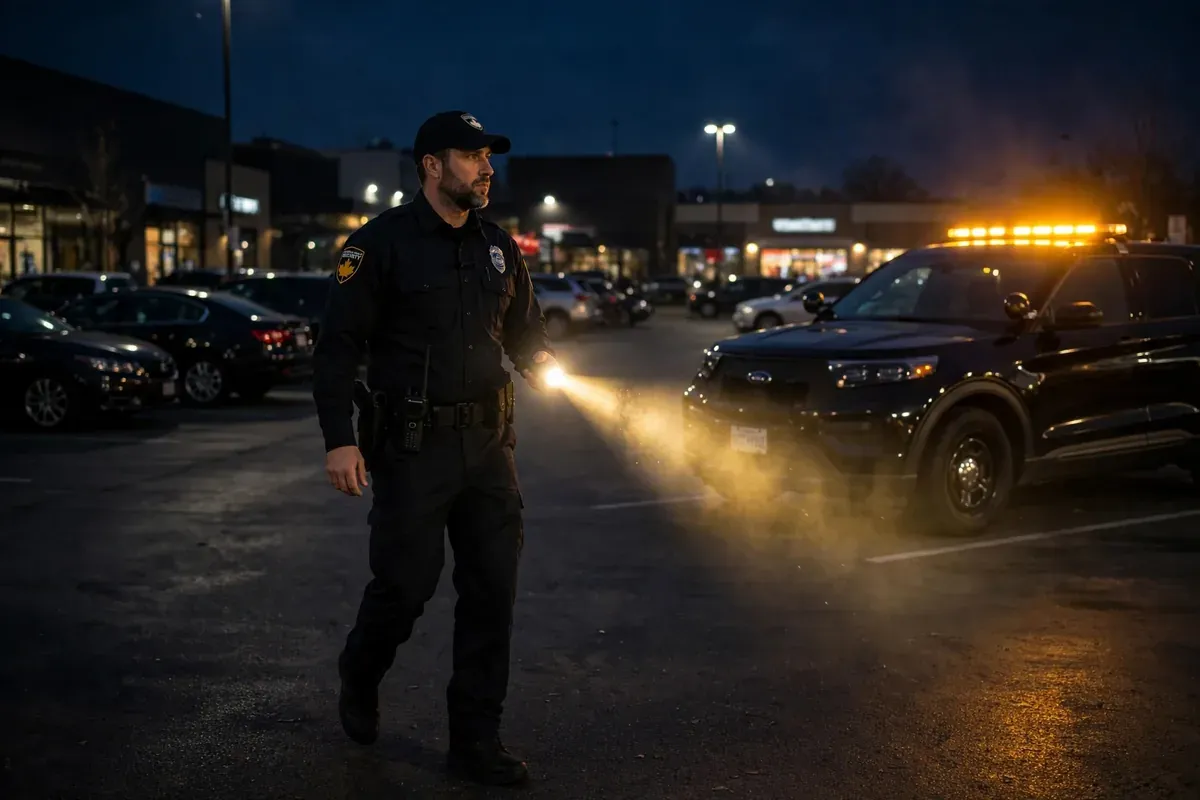
Neither option is universally better. CCTV monitoring is cost-effective for continuous recorded coverage, while a physical guard adds judgment and immediate on-scene response that a camera alone cannot provide. Most well-protected Edmonton properties use both together rather than choosing one.
The two also complement each other in practice. Camera footage gives a patrol guard something to review before their next visit, flagging any unusual activity between rounds, while the guard's physical presence deters exactly the kind of casual opportunism that a camera alone only records after the fact.
Cost is often the deciding factor between the two, and that is a reasonable basis for the decision as long as the trade-off is understood clearly. A camera system costs less to run night after night, but it cannot walk a property line or check a door handle the way a patrol officer can.
How to Build the Right After-Hours Plan for Your Property
Start by listing exactly what you assume is covered, then compare that list against your actual contract or quote. Any gap between the two is exactly what to ask your provider to clarify before an incident forces the question.
This exercise takes fifteen minutes and costs nothing, yet it is the single step most business owners skip entirely until the moment they actually need the coverage they assumed they had.
For properties in industrial areas like Nisku Industrial Park (T9E), where response times run slightly longer, scheduled patrol paired with mobile patrol often closes the gap better than reactive alarm response alone.
Canadian Shield Security's 32+ licensed officers cover Edmonton and surrounding communities 24 hours a day, including nights, weekends, and public holidays, with a free consultation to map your specific property against exactly what each coverage type includes.
Revisit the plan periodically too, not just once at signup. A property's risk profile changes as a business grows, as neighbouring lots get developed or vacated, or as a neighbourhood sees a genuine shift in overnight foot traffic, and coverage that made complete sense a year ago may no longer match the property's current actual risk.
Conclusion
After-hours security is only as good as your understanding of what it actually covers. A clear plan, confirmed in advance rather than assumed, is what keeps a 2 a.m. incident from turning into an unpleasant coverage surprise for your business.
Canadian Shield Security will walk through exactly what your current plan includes and where the gaps are, entirely free of charge. Call 1 (800) 326-7879 to confirm your after-hours coverage before you actually need it.
|
SOFT CTA Canadian Shield Security serves Edmonton 24/7. Free consultation -- no hidden fees. Call 1 (800) 326-7879. |
Frequently Asked Questions
Are after-hours guards SSIA licensed in Edmonton?
Yes. Every officer covering an after-hours shift, whether mobile patrol, on-site guard, or alarm response, holds a valid licence under the Security Services and Investigators Act (Alberta). Licensing does not change based on the hour; the same background checks and training standards apply at 3 a.m. as they do at 3 p.m.
How much does after-hours security coverage cost in Edmonton?
After-hours security in Edmonton typically costs $28-$45 per hour for mobile patrol coverage, or $32-$48 per hour for a stationed on-site guard, depending on your property and risk level. Canadian Shield Security offers a free site assessment to build a plan around your specific hours, with no hidden fees added later.
Is after-hours coverage the same in Sherwood Park as downtown Edmonton?
Coverage stays broadly consistent across Edmonton and nearby communities, including Sherwood Park, St. Albert, and Nisku, since our GPS dispatch system routes the closest available officer regardless of district. Outer industrial areas may see slightly longer response windows than dense downtown zones, but the coverage itself does not change.
Does 24/7 monitoring mean a guard is always on site?
No. Twenty-four seven monitoring usually means an alarm panel or camera feed is being watched continuously, not that a guard is physically present at your property around the clock. A guard is dispatched only when the system detects an event, unless you specifically add scheduled patrol or stationed on-site coverage.
What is not included in a typical after-hours security plan?
A typical after-hours plan does not include a guard permanently stationed inside your building unless you specifically pay for on-site coverage, nor does it include repairs to broken locks, windows, or alarm hardware. It also does not include police authority; guards observe, document, and secure a scene rather than making arrests.
